
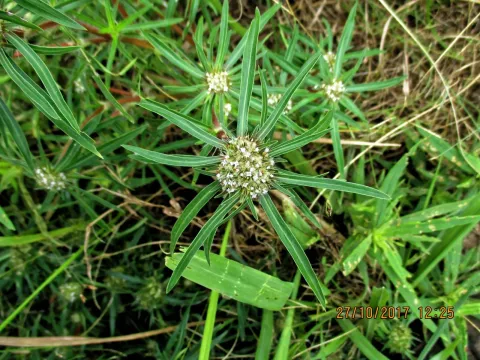
Spermacoce radiata
Spermacoce radiata
Spermacoce radiata is a member of the Rubiaceae family, native to tropical environments. This plant thrives in warm, humid regions and requires specific conditions to achieve high biomass production.
What the section contains
Spermacoce radiata
The plant prefers fertile, well-draining soils with a neutral pH. Proper soil structure is essential for root development, and sandy loams are generally recommended to prevent the risk of water stagnation.
Temperature management is critical, as the crop prefers constant warmth between 22°C and 28°C. Exposure to frost or prolonged cool weather significantly hampers growth and can lead to plant mortality.
Regarding moisture, Spermacoce radiata requires consistent irrigation but fails in waterlogged conditions. Farmers should implement drip irrigation systems to maintain moisture levels while ensuring soil aeration.
Botanically, the species is defined by its distinct radial inflorescences and opposite leaves. Its architectural form allows for effective light interception, provided the planting density is properly calculated.
Fungal diseases are the primary threat to Spermacoce radiata, particularly during high-humidity seasons. Pathogens like Fusarium can cause significant root rot, leading to crop failure if not managed early.
Pest pressure from aphids and spider mites is common in both field and greenhouse settings. These pests feed on the phloem, weakening the plant and facilitating secondary viral infections.
Cultural practices such as adequate plant spacing are the first line of defense. Ensuring sufficient airflow between individual plants reduces the microclimate humidity that favors fungal colonization.
Integrated Pest Management (IPM) is highly recommended. This includes releasing natural predators for aphids and applying targeted organic fungicides when monitoring reveals the threshold of infestation has been met.
Consistent scouting and early detection are vital. By identifying pest hotspots early, growers can intervene locally and prevent the spread of diseases across the entire planting area.