
Nauclea
Nauclea
Nauclea is a genus of trees and shrubs belonging to the Rubiaceae family, native to the tropical regions of Africa and Asia. These plants typically inhabit moist tropical forests where the ecosystem provides high levels of humidity and stable warm temperatures throughout the year.
What the section contains


Nauclea
The cultivation of Nauclea requires deep, fertile, and well-drained soils. Proper soil management is essential as the root system is sensitive to waterlogging. Planting in areas with effective water runoff or artificial drainage systems is a standard procedure for commercial plantations.
The climate requirements for optimal growth are strict, requiring temperatures between +22°C and +30°C. Nauclea plants are non-frost tolerant and suffer severe stress if exposed to cold winds or temperature drops, making them suitable only for equatorial or sub-equatorial agricultural zones.
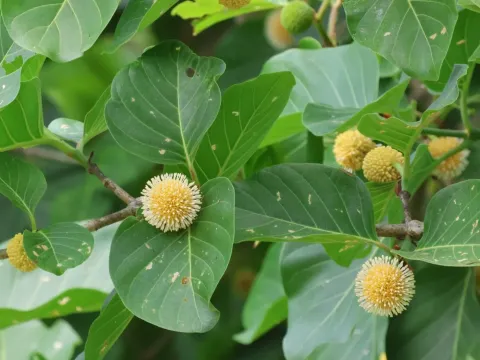
Botanically, Nauclea is characterized by its opposite, often glossy leaves and distinctive globose flower heads. These floral structures are a key feature of the genus, and they eventually develop into fleshy fruits which are sometimes consumed locally or utilized in traditional medicine.
Commercially, Nauclea is highly prized for its timber. Species like Nauclea diderrichii produce hard, durable wood that is resistant to insect attacks and rot, making it an excellent material for high-quality furniture, heavy construction, and exterior architectural applications.
Fungal pathogens represent a primary threat to Nauclea crops, particularly in environments with high humidity. These pathogens can cause root and bark decay, which are often difficult to detect until significant internal damage has occurred within the tree.
Wood-boring insects are the most destructive pests for this culture. These insects penetrate the woody tissue of the stem, creating galleries that compromise the structural integrity of the timber and significantly lower its commercial value during harvest.
Competition from aggressive weed species is a major challenge during the early stages of plant development. Intensive weeding and the use of mulch are necessary to ensure that young saplings receive adequate sunlight and soil nutrients to achieve rapid vertical growth.
Nutrient deficiencies, particularly regarding nitrogen and trace minerals, can manifest as chlorosis in leaves. Regular soil analysis and the application of balanced organic fertilizers are essential for maintaining the health and vigor of plantation trees.
Climate change and prolonged drought periods are emerging threats that impact the growth rates of tropical trees. Modern plantation management now requires sophisticated irrigation monitoring to mitigate the risks associated with unpredictable rainfall patterns in tropical regions.