
Nertera
Nertera
Nertera belongs to the Rubiaceae family. This perennial herbaceous plant is native to temperate and tropical latitudes of the Southern Hemisphere, including New Zealand, South America, and parts of Asia.
What the section contains


Nertera
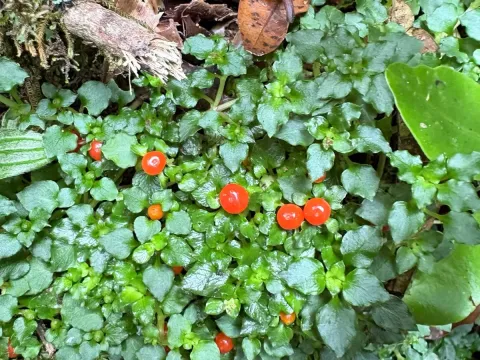
In cultivation, Nertera is valued primarily as a decorative foliage and fruit-bearing plant, often referred to as "coral moss". It forms dense ground-covering cushions covered with small rounded leaves, which in summer become hidden under a mass of bright orange or red berries.
The plant has high requirements for air humidity and prefers cool conditions, especially during the fruiting period. The optimal temperature for vegetation is 18–22 degrees, but in winter, a temperature of about 10–12 degrees is necessary to stimulate berry development.
For growing Nertera, a light, nutritious, and well-drained substrate with a neutral or slightly acidic reaction is required. It is important to avoid waterlogging the soil, as tender roots are easily susceptible to rot when water stagnates in the tray.
Nertera prefers bright but diffused lighting, as direct sunlight can cause leaf burns. In home conditions, the best place for the pot is on eastern or western windows, where light remains soft throughout the day.
The main pests of Nertera are spider mites and scale insects, which multiply actively when humidity levels are disrupted and the indoor air becomes too dry.
In case of excessive watering and poor ventilation, the root system of the plant becomes prone to fungal diseases, such as root rot, which quickly leads to the death of the entire mat.
Disease prevention consists of regular room ventilation, maintaining moderate humidity, and timely removal of damaged parts of the plant to prevent the spread of mold spores.
When pests are detected, it is recommended to use specialized insecticides or acaricides, strictly following the manufacturer's instructions, as the plant can be sensitive to aggressive chemicals.
Constant monitoring of the condition of leaves and berries allows for early detection of problems and minimizes damage to the decorative appearance of the crop.