
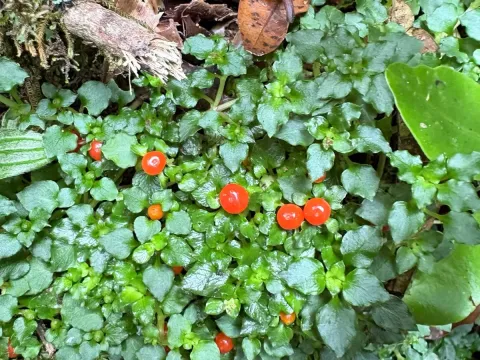
Nertera
Nertera Banks et Soland. ex. Gaertn.
Nertera is a genus of herbaceous plants belonging to the Rubiaceae family. It is widely cultivated for its ornamental value, particularly due to its vibrant, berry-like fruits often referred to as coral moss.
What the section contains

Nertera
The plant originates from the tropical and subtropical regions of the Southern Hemisphere, including New Zealand, South America, and parts of Asia, where it grows in moist forest floors.
Successful cultivation requires cool and stable temperatures, ideally between 18°C and 22°C. High temperatures are detrimental, often causing the fruit to drop prematurely and weakening the plant structure.
The preferred growing medium is a well-draining, loose peat-based potting mix. Consistent moisture is crucial, but the soil must never be waterlogged, as the roots are highly susceptible to decay.
Nertera thrives in bright, indirect light. Direct sunlight exposure during the afternoon can scorch the delicate foliage and dry out the soil too rapidly, impacting the plant's overall health.
Common pests include aphids and mealybugs, which are attracted to the succulent foliage. Early detection and regular inspection of the leaf axils are necessary for effective management.
Root rot is the most prevalent disease, typically resulting from poor drainage or overwatering. Maintaining a consistent but moderate moisture level is key to disease prevention.
Fungal infections can occur if there is insufficient air circulation in the growing environment. Providing good ventilation helps keep the foliage dry and reduces the risk of leaf spots.
In dry indoor conditions, particularly during winter, spider mites can become a significant issue. Increasing local humidity through misting or trays of water can help deter these pests.
If the plant becomes heavily infested or infected, it is best to prune away damaged sections and apply appropriate horticultural soap or systemic treatments to restore plant vitality.