
Nauclea latifolia
Nauclea latifolia
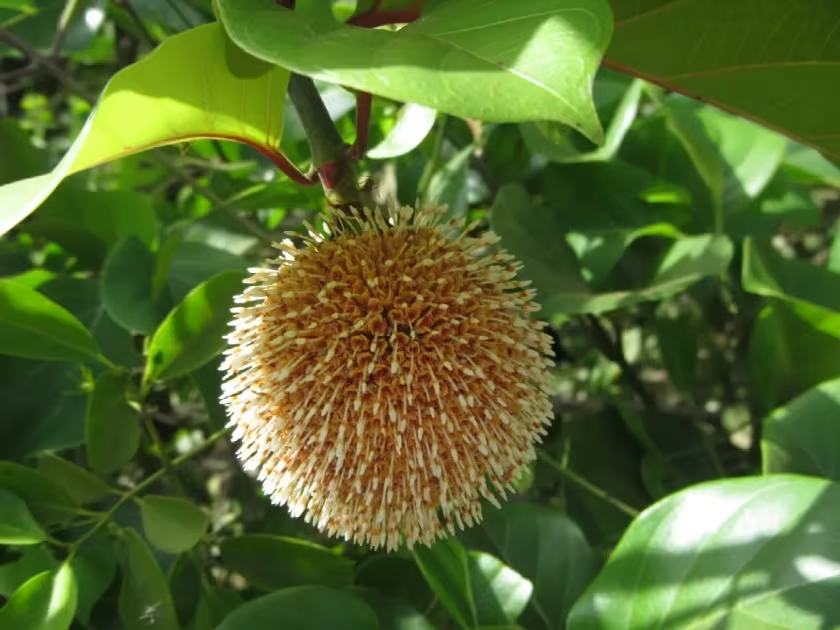
Description
Sowing dates
Nauclea latifolia is primarily propagated through seeds or cuttings in tropical climates. Seeds are sown in nurseries in well-drained substrate immediately after harvesting, as they tend to lose viability quickly.
Successful germination requires consistent soil moisture and protection from direct sunlight during the early stages of seedling development. The optimal temperature for emergence ranges from 25 to 30 degrees Celsius.
Transplanting young plants to their permanent location is typically performed at the onset of the rainy season to ensure sufficient moisture for root system establishment. Spacing between trees should be at least 3 to 5 meters.
The plant exhibits high regenerative capacity, allowing for rejuvenation pruning during raw material harvesting. It adapts well to various vegetative propagation methods, including the use of root cuttings.
Site selection must consider the need for shading young specimens, while mature trees prefer open, sunny areas to achieve maximum fruit production.
Growing requirements
Nauclea latifolia belongs to the Rubiaceae family and is predominantly found in the tropical forests and savannahs of West and Central Africa. The plant is highly sensitive to cold and cannot tolerate freezing temperatures.
It prefers deep, fertile loamy soils with excellent drainage properties. The optimal soil pH level for the development of the crop ranges from slightly acidic to neutral, typically between 5.5 and 6.5.
For healthy growth, the tree requires significant rainfall distributed evenly throughout the year or access to deep groundwater. In regions with a pronounced dry season, supplementary irrigation is necessary.
The culture is light-demanding, yet in its early stages, it requires protection from intense heat, which is why it is often planted in agroforestry systems alongside other tree species.
The plant is extremely sensitive to waterlogging; therefore, choosing planting sites on elevated terrain with loose soil structure is critical to prevent root rot diseases.
Yield
The main economic products include fruits, leaves, and bark, which are widely used in traditional medicine to treat fever, malaria, and gastrointestinal disorders. The fruits are edible and valued for their antioxidant properties.
The bark contains alkaloids such as nauclethine, making it a valuable raw material for the pharmaceutical industry. Fruit yield depends on the age of the tree and growing conditions, reaching its peak in mature specimens between 10 and 15 years.
Leaf biomass can be utilized as a fodder supplement for small ruminants, increasing the culture's value in integrated farming systems. Proper pruning practices can result in stable biomass growth annually.
Productivity is directly related to management quality: regular weeding and mulching around the base can increase the yield of medicinal raw material by 20–30%.
Fruit harvesting is carried out as they mature, indicated by a change in the shell color to a lighter or yellowish hue, which usually occurs in the middle or end of the wet season.
Main diseases and pests
The most significant danger to the plant is fungal root disease, often caused by excessive moisture and poor soil drainage. Symptoms include leaf wilting and the death of young shoots.
Pests such as aphids and various leaf-eating caterpillars can cause substantial damage to the foliage during the plant's early years. Regular inspections are recommended to address infestations in a timely manner.
Nematode infestation is a specific threat to the crop when grown in sandy soils. Prevention involves the application of organic fertilizers and the practice of crop rotation with species that suppress pathogens.
The plant is also susceptible to late blight (Phytophthora) during prolonged rainy periods, necessitating strict orchard hygiene and ensuring adequate air circulation between trees.
Disease management includes the application of biological fungicides and timely sanitary pruning of infected plant parts to prevent the spread of infection throughout the plantation.
Harvesting
Harvesting fruits must be done by hand due to their fragile pulp. Maintaining the produce's quality requires avoiding mechanical damage during picking and subsequent transportation.
Bark harvesting is strictly performed on lateral branches to avoid permanent damage to the main trunk, ensuring the tree's ability to recover after the raw material is collected.
After harvesting, fruits should be processed within 24 to 48 hours, as they are prone to rapid decay due to high sugar and moisture content in the pulp.
For long-term storage of medicinal raw material, leaves and bark should be dried slowly in the shade with good ventilation, preserving the alkaloid profile without degrading active compounds.
Adherence to proper harvesting technology guarantees high product value and extends the tree's productive lifespan, which can span several decades.