
Myrmecodia
Myrmecodia
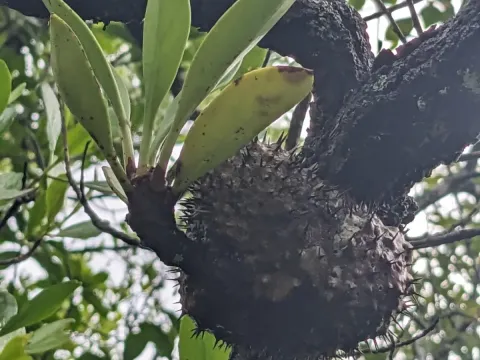
Myrmecodia is a fascinating genus of epiphytic plants belonging to the Rubiaceae family. Known for their symbiotic relationship with ants, these plants develop a specialized, swollen stem called a caudex, which provides shelter for the colony and nutrients for the plant.
What the section contains


Myrmecodia
Successful cultivation requires replicating a humid tropical environment. High ambient humidity, ideally between 70% and 85%, is essential for the healthy development of the caudex and foliage. This is often best achieved in greenhouse conditions or terrariums.
The substrate must be exceptionally well-draining, mimicking the epiphytic habitat found on tree trunks. A mix of orchid bark, high-quality sphagnum moss, charcoal, and perlite creates the porous environment necessary to prevent root suffocation.
Light levels should be bright but filtered. Direct tropical sun can cause severe burn damage to the fleshy caudex, while insufficient light leads to etiolation and weakens the plant’s ability to maintain its symbiotic structures.
Temperature management requires consistent warmth without drastic fluctuations. The ideal range is between 20°C and 28°C. Dropping below 15°C can cause the plant to enter a state of dormancy or decline significantly, making consistent heating vital in cooler climates.
Root rot is the most common threat to Myrmecodia, typically triggered by an unsuitable substrate that retains too much water or poor air circulation. Once the base of the caudex starts to soften, the damage is often irreversible.
Pests such as mealybugs and scale insects are frequently attracted to the plant's hidden crevices within the caudex. These pests are difficult to eradicate due to the plant’s complex, irregular anatomy, requiring diligent manual inspection.
Spider mites are a major issue in environments with low humidity. They typically colonize the underside of the leaves, causing stippling and yellowing, which eventually leads to leaf drop and decreased photosynthetic capacity.
Fungal infections can arise if water collects in the folds of the caudex for extended periods. It is critical to ensure that after irrigation, the plant is in a well-ventilated area to allow surface moisture to evaporate quickly.
Strict hygiene protocols, including the sterilization of tools and the removal of decaying organic matter from the pot, are necessary to keep the plant free from opportunistic pathogens. Regular monitoring is the most effective form of plant protection.