
Nauclea diderrichii
Nauclea diderrichii
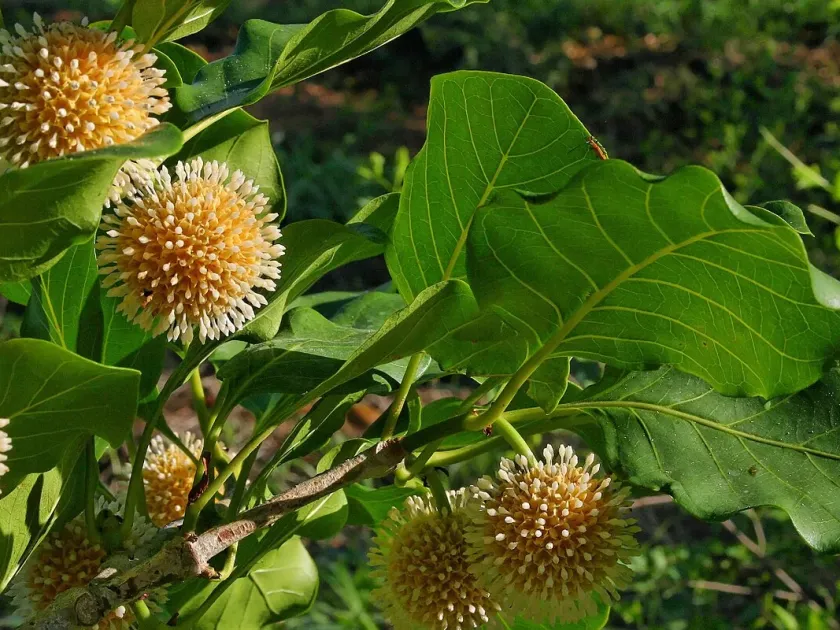
Description
Sowing dates
Nauclea diderrichii is propagated primarily through seeds, which require specific conditions in nursery settings to ensure successful germination.
The timing of sowing is critical and usually coincides with the beginning of the rainy season to provide the necessary moisture for early root development.
Seeds must be treated appropriately to break dormancy, as natural germination rates can be inconsistent without proper pre-sowing care.
Seedlings are nurtured in containers or nursery beds until they reach a robust size, typically exceeding 40 centimeters in height, for field planting.
Land preparation before transplanting involves clearing competing vegetation and ensuring the soil is sufficiently loosened to encourage deep root penetration.
Growing requirements
This species thrives in deep, fertile, and well-drained soils, typically found in tropical environments with high biological activity.
Nauclea diderrichii requires a consistently warm climate with high relative humidity, as it is native to lowland tropical rainforest zones.
While young trees benefit from light shade to protect them from direct solar stress, mature specimens require full canopy exposure to maximize photosynthesis.
Water management is essential; the soil should be moist but not waterlogged, as poor drainage significantly hinders root health and tree growth.
Soil pH levels should ideally be slightly acidic to neutral, allowing for optimal nutrient uptake and general plant vigor.
Yield
Yield estimation for this culture is based on the volume of high-quality timber produced over a long-term harvest rotation, typically spanning decades.
Proper management of planting density ensures that each tree has sufficient space to grow, leading to a higher percentage of knot-free, valuable timber.
Annual growth rates for trunk diameter vary based on local site conditions, but successful plantations demonstrate consistent development over time.
Regular thinning of plantations is a standard silvicultural practice used to enhance the final yield and quality of the remaining timber trees.
Economic returns are maximized when the wood reaches technical maturity, characterized by specific diameter and grain density standards.
Main diseases and pests
Young plantations are highly susceptible to insect damage, particularly from borers that target tender stems and disrupt growth patterns.
Fungal infections, often introduced through physical damage to the bark or excessive soil moisture, remain a constant challenge for foresters.
Wild animals can cause significant damage to young saplings, often requiring protective measures like fencing or tree guards during the first few years.
Weed competition is one of the most significant threats during the establishment phase, necessitating active site maintenance and clearing.
Environmental stress, including irregular rainfall patterns, can weaken the trees, making them more prone to secondary pests and diseases.
Harvesting
Harvesting Nauclea diderrichii involves technical felling and rapid processing to preserve the quality of the Opepe timber for the international market.
Post-harvest handling is critical, as the timber must be correctly dried and treated to prevent splitting and to maintain its renowned durability.
Sustainable logging practices are essential to ensure the longevity of the forestry operation and to protect the local environment from degradation.
The logs are typically graded based on their size and structural integrity, which determines their specific application in construction or fine woodworking.
Effective forestry management integrates the harvest process with reforestation efforts to maintain the cycle of production for future generations.