
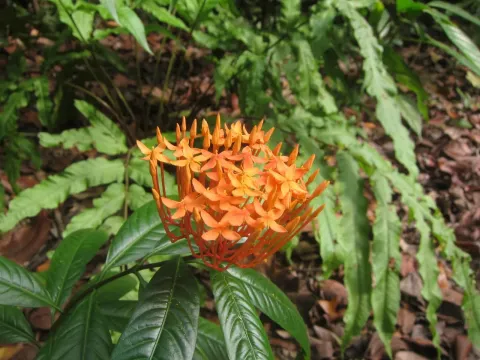
Ixora lobbii
Ixora lobbii
Ixora lobbii is a notable shrub belonging to the Rubiaceae family. Native to the tropical regions of Southeast Asia, this species is characterized by its dense growth habit and elegant, long-lasting floral displays.
What the section contains
Ixora lobbii
This crop thrives in warm, humid climates where temperatures remain consistently between 22°C and 28°C. Protecting the plant from cold drafts is essential to maintain vigorous leaf growth and floral development.
Agricultural success depends on providing acidic, well-drained soil rich in organic matter. Using a substrate consisting of peat, leaf mold, and perlite ensures adequate aeration while retaining necessary moisture.
Light management is crucial, as the plant prefers bright, indirect light to stimulate blooming. Excessive exposure to direct midday sun can bleach the foliage and reduce the plant's overall aesthetic value.
The primary economic value of Ixora lobbii lies in its use for ornamental landscaping and greenhouse production, where it is cultivated for its clusters of vibrant, tubular flowers.
Common pests include spider mites and scale insects, which frequently infest plants in environments with poor air circulation or low ambient humidity.
Chlorosis is a common physiological disorder, typically caused by iron deficiency or the use of hard, alkaline water, which inhibits nutrient uptake by the roots.
Root rot represents the most significant threat to the crop, occurring primarily when drainage is insufficient and the substrate remains saturated for extended periods.
Effective management strategies involve the use of systemic insecticides to control sap-sucking pests and periodic repotting to refresh the soil structure.
Integrated pest management protocols, including early detection and the use of appropriate fungicides, are necessary to maintain a healthy stand and ensure high-quality flower production.