
Ixora hookeri
Ixora hookeri
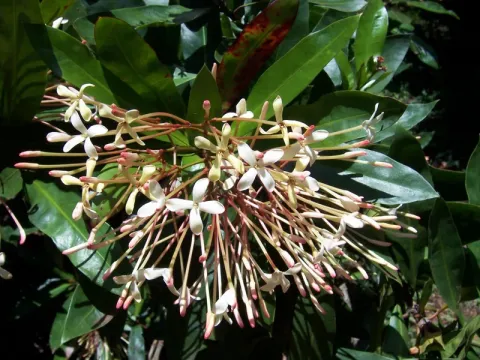
Ixora hookeri is an ornamental evergreen shrub belonging to the Rubiaceae family, native to the tropical regions of Southeast Asia. Known for its distinct floral structure, this species thrives in humid, frost-free environments that mimic its natural jungle habitat.
What the section contains
Ixora hookeri
Temperature regulation is paramount for this culture, as it requires sustained temperatures between 18°C and 28°C. Exposure to sudden drops or cold winds often leads to physiological stress, resulting in chlorosis or premature senescence of the foliage.
The ideal substrate for Ixora hookeri must be acidic to neutral in pH, highly porous, and rich in organic matter. Professional growers often incorporate peat moss and perlite to ensure the root system receives sufficient oxygen while retaining necessary moisture.
Regarding light, the plant performs best under bright, filtered sunlight. While it is a tropical sun-loving species, direct noon exposure can scorch the leaves; therefore, greenhouse cultivation typically utilizes light-diffusion systems to maintain foliage health.
Water quality and frequency are critical in its management. The plant demands consistent soil moisture but cannot tolerate waterlogging, which necessitates high-quality drainage systems. Humidity levels should be kept between 70% and 80% for optimal development.
Scale insects represent the most significant pest threat, often colonizing the woody stems and nodes of the plant. These insects sap the plant's vitality, making management through horticultural oils or systemic insecticides essential for commercial production.
Spider mites are common in environments with inadequate humidity. These microscopic pests target the undersides of leaves, causing yellowing and webbing, which necessitates regular preventative inspections and humidity control measures.
Root rot, driven by Phytophthora or Pythium species, is a common issue when drainage is poor. To prevent this, growers must avoid over-irrigation and strictly control the irrigation cycle based on the plant's transpiration rate.
Nutrient deficiency, specifically iron chlorosis, frequently appears if the soil pH becomes too alkaline. This prevents the plant from absorbing necessary micronutrients, resulting in pale, yellowing leaves with green veins.
Proper sanitation in the greenhouse is vital to prevent the spread of fungal and bacterial infections. Using sterilized soil media and disinfecting pruning shears after every use helps maintain the long-term health and productivity of the crop.