
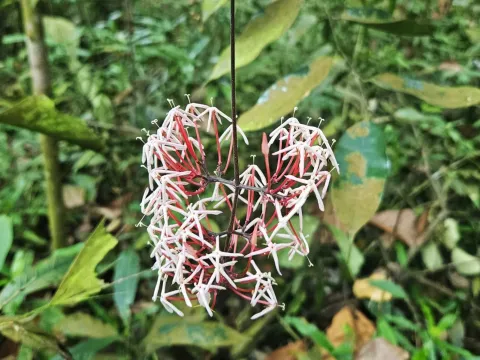
Ixora pendula
Ixora pendula
Ixora pendula is an evergreen shrub belonging to the Rubiaceae family. Native to the tropical regions of Southeast Asia, this plant thrives in humid forest environments and prefers locations shielded from intense, direct sunlight which can scorch its delicate foliage.
What the section contains
Ixora pendula
For successful cultivation, the plant requires consistently high ambient temperatures, with no tolerance for frost. The ideal temperature range for active growth is between +20 and +28 degrees Celsius, while maintaining high humidity levels is crucial for the plant's overall vitality.
The soil requirements involve using slightly acidic, organic-rich substrates. Proper drainage is essential, as the root system is highly susceptible to rot if water accumulates, which can lead to rapid plant decline and death.
Botanically, the plant is characterized by its leathery, glossy dark green leaves and its distinct pendant-shaped inflorescences. The flowers are arranged in dense corymbs, which provide significant ornamental value during the peak flowering season.
In terms of agricultural and horticultural use, Ixora pendula is primarily grown as an ornamental plant for greenhouses, conservatories, and interior landscaping. In tropical climates, it is frequently utilized in landscape architecture to form hedges or decorative garden borders.
Common pests affecting Ixora pendula in indoor or greenhouse environments include scale insects and mealybugs, which feed on the plant's sap and weaken its structure. Low humidity levels may also lead to infestations of spider mites.
The most prevalent diseases are fungal infections caused by overwatering or poor soil drainage. Leaf chlorosis is also a common issue, often resulting from the use of alkaline soil which prevents the plant from absorbing necessary micronutrients like iron.
Regular inspection of the underside of leaves is recommended for the early detection of pests. If signs of infestation appear, the application of systemic insecticides combined with a revision of the irrigation schedule is necessary.
Maintaining sanitation in the growing area by removing fallen leaves helps minimize the risk of pathogen accumulation. Ensuring adequate air circulation within the dense canopy is vital to prevent stagnant conditions that favor fungal growth.
Applying balanced mineral fertilizers containing chelated iron helps maintain the vibrant color of the foliage and prevents physiological growth disorders throughout the year.