
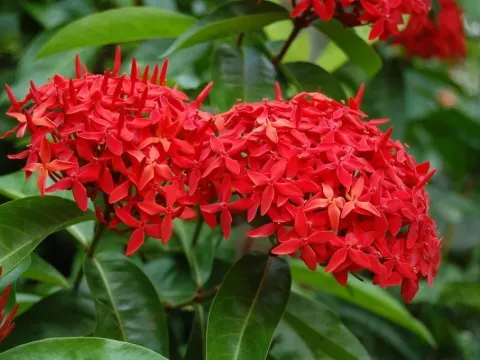
Ixora hybrid
Ixora hybrids
Ixora hybrid belongs to the Rubiaceae family and is widely recognized for its dense, glossy foliage and large, showy clusters of tubular flowers. These hybrids are developed to enhance color variety, ranging from bright yellow and orange to deep crimson and pink.
What the section contains
Ixora hybrid
Originating from the tropical regions of Southeast Asia, these plants require constant warmth to thrive. In a cultivation setting, they are considered sensitive to temperature fluctuations and perform best when kept in environments between 20°C and 25°C throughout the year.
Soil requirements for the Ixora hybrid are specific: they thrive in acidic, well-draining media rich in organic matter. Maintaining a soil pH between 5.0 and 6.0 is essential for nutrient uptake, particularly for preventing iron deficiency and subsequent leaf chlorosis.
Light intensity is a critical factor in the plant's physiological development. While they require plenty of sunlight to initiate blooming, direct midday exposure can scorch the leaves; therefore, providing bright, filtered light is the optimal strategy for greenhouse production.
Water management involves keeping the substrate consistently moist but never waterlogged. Since Ixora is prone to root rot, the use of a professional-grade drainage system and permeable potting mix is vital for long-term health and vitality of the specimen.
Pests such as spider mites and scale insects are common threats to Ixora plants, especially in environments where humidity levels are not consistently maintained at high levels.
Fungal infections, particularly root rot, represent a primary threat to the crop, often triggered by over-irrigation or cold, damp substrate conditions that prevent root aeration.
Leaf chlorosis is a common physiological issue, which is typically linked to alkaline soil conditions that lock out iron, requiring the application of iron chelates as a corrective measure.
Integrated pest management (IPM) is recommended, utilizing targeted biological controls or systemic insecticides to keep the population of sap-sucking pests at a manageable level.
Maintaining a hygienic growing space, which includes the removal of fallen debris and dead foliage, is a key preventative practice to minimize the spread of fungal pathogens and pests in the greenhouse environment.