
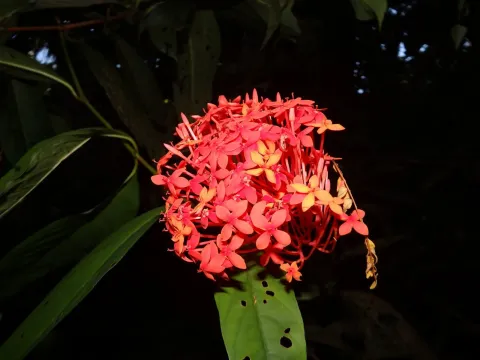
Javanese Ixora
Ixora javanica
The Javanese Ixora (Ixora javanica) is a perennial evergreen shrub belonging to the Rubiaceae family. This species is native to the tropical forests of Southeast Asia and Indonesia, thriving in humid environments.
What the section contains
Javanese Ixora
Cultivation requires strict adherence to temperature regimes, ideally maintained between 20°C and 28°C. The plant is highly sensitive to cold, and temperatures dropping below 10°C can cause severe damage or death, necessitating greenhouse cultivation in non-tropical zones.
The soil must be acidic with a pH level between 5.0 and 5.5. A well-draining, peat-based substrate enriched with pine needles or similar organic matter is essential for maintaining the health of the root system and proper nutrient uptake.
Bright, filtered light is necessary for optimal development. Direct sunlight in the middle of the day can lead to leaf scorching, while insufficient light levels will inhibit flower bud formation and cause weak, elongated stems.
Humidity management is a critical agronomic factor for this species. Sustaining a relative humidity level of at least 70% is required to prevent leaf dehydration and maintain the vibrant appearance of the foliage.
Common pests affecting Javanese Ixora include spider mites, mealybugs, and scale insects. These pests thrive in environments with poor ventilation and low humidity, often appearing in crowded greenhouse settings.
Leaf chlorosis is a prevalent issue usually triggered by irrigation with hard, calcium-rich water. This high pH environment prevents the plant from absorbing iron, resulting in yellowing foliage with green veins.
Root rot typically occurs when the substrate remains waterlogged for extended periods, especially during lower temperature cycles. Providing a robust drainage layer is the primary defense against this destructive disease.
Fungal pathogens can also spread in stagnant air conditions. Regular inspection and maintaining proper spacing between plants are essential steps in professional crop management to prevent the spread of infections.
Integrated pest management (IPM) practices, such as the use of systemic insecticides and maintaining strict hygiene in the cultivation area, are highly recommended to keep the plants healthy and productive.