
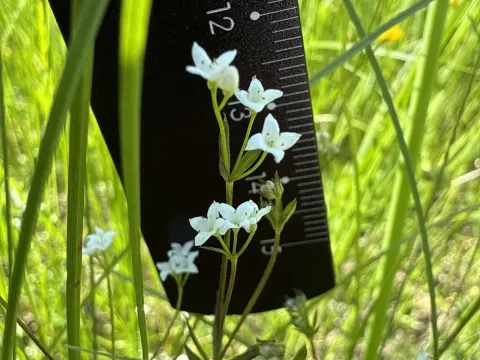
Fen bedstraw
Galium uliginosum
Fen bedstraw is a perennial herbaceous plant typically managed within natural or sown grassland mixtures rather than as a monoculture crop.
What the section contains
Fen bedstraw
The optimal time for introducing this species into an agricultural meadow is early spring, ensuring sufficient soil moisture for successful germination.
Fall sowing is also a viable practice, allowing the seeds to undergo natural winter chilling, which improves germination consistency in the following season.
Given the extremely small size of the seeds, shallow placement (0.5–1 cm) is critical to ensure that the seedling reaches the surface before exhausting energy reserves.
Rolling the soil after sowing is a necessary agronomic step to improve the capillary contact between the seeds and the moist substrate.
This species, belonging to the Rubiaceae family, is a hydrophytic plant that requires consistent access to groundwater or waterlogged soil.
It thrives best in nutrient-rich, humus-heavy soils often found in alluvial meadows, wetlands, and peat-rich bog margins.
Galium uliginosum shows remarkable tolerance to temporary waterlogging, making it an excellent candidate for stabilizing flood-prone agricultural areas.
While the plant tolerates partial shade, it achieves its highest biomass production under open, high-light conditions during the summer growth phase.
The preferred soil reaction is neutral to slightly acidic, which is typical for many wetland environments where the species naturally occurs.
As a non-monoculture crop, the yield is measured by its contribution to the overall quality and biomass density of hay harvested from meadows.
The plant enhances the nutritional profile of forage, providing a better balance of essential elements for livestock when integrated into hay.
Its role in ecological stability is significant, as it helps prevent soil erosion and preserves the structure of fragile marshland soils.
Productivity is heavily weather-dependent, with prolonged summer drought significantly reducing the total forage biomass available for harvest.
In terms of agricultural value, it is regarded as a beneficial perennial component that maintains the ecological balance of wetlands.
Common fungal pathogens such as powdery mildew can affect the plant when high humidity levels coincide with stagnant air conditions.
Insect pests, including various leaf-feeding beetles and gall midges, can cause cosmetic and structural damage, impacting the overall yield.
Competition from aggressive sedges and invasive grasses is the primary challenge to the persistence of fen bedstraw in a managed field.
Inappropriate grazing intensity or overly frequent mowing cycles can exhaust the plant's root system, leading to a decline in population density.
- Strategic mowing to maintain competitive balance.
- Monitoring for signs of excessive fungal infection.
- Avoidance of soil compaction near wetland sites.
The harvest period is optimal during the full flowering phase when the concentration of bioactive compounds in the stems and leaves is highest.
Standard hay-making equipment is used, with a focus on low cutting heights to recover the maximum amount of nutritious vegetation.
Drying the material in thin swaths is essential to retain the leaves, which contain the majority of the nutrients, and to prevent leaf shattering.
Care should be taken during the harvesting process to avoid collecting undesirable woody or toxic weed species present in the meadow.
Storage requires well-ventilated dry conditions to ensure that the hay remains free of mold and retains its quality for winter feed.