
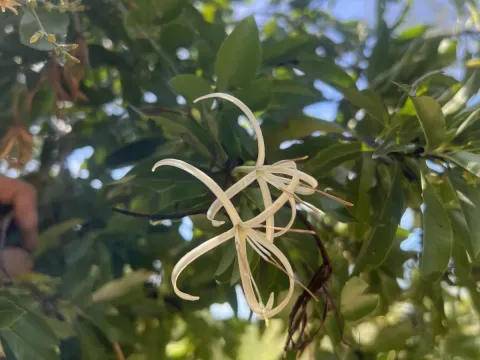
Exostema
Exostema
Exostema is a genus of flowering plants in the family Rubiaceae. These evergreen trees and shrubs are native to the tropical regions of the Americas and the Caribbean islands.
What the section contains


Exostema
The plant thrives in warm, humid climates and is highly sensitive to frost, which limits its outdoor cultivation to tropical or subtropical geographic zones.
Optimal soil conditions for Exostema include well-drained, nutrient-rich substrates. It is essential to avoid waterlogged conditions to prevent root rot, which is a common issue in humid environments.
Cultivation requires sufficient light, but the plants often prefer filtered sunlight to mimic the natural conditions of the forest understory or canopy edges.
Management techniques involve careful monitoring of soil moisture and nutrient levels to ensure healthy growth of the foliage and bark development.
Fungal diseases represent a significant threat to Exostema, particularly in dense plantations where airflow is restricted and humidity levels remain persistently high.
Pests such as scale insects and aphids often target the sap of the plant, potentially leading to stunted growth and providing entry points for secondary infections.
Leaf-eating insects can cause defoliation, which reduces the plant's photosynthetic capacity and hinders its overall vigor in unfavorable environmental conditions.
Integrated pest management strategies are recommended, focusing on biological controls and ensuring adequate plant spacing to facilitate natural ventilation.
If chemical intervention is necessary, it must be performed with extreme caution, as the bark of many Exostema species has historically been utilized for pharmacological applications.