
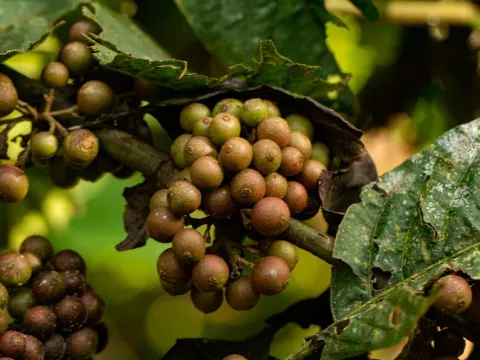
Galiniera
Galiniera
Galiniera is a genus of evergreen trees and shrubs belonging to the Rubiaceae family. Native primarily to the tropical regions of Africa, these plants are often found in shaded forest environments, showcasing unique morphological adaptations typical of the family.
What the section contains

Galiniera
The plant thrives in moist, well-drained soils rich in organic matter. Soil structure is critical; the root system requires significant oxygen exchange, which is why loamy or sandy-loam soils with high humus content are preferred for its healthy development.
Climate requirements involve stable tropical temperatures and high atmospheric humidity. Galiniera is not frost-tolerant and requires protection from temperatures below 15 degrees Celsius. Sustaining an environment that mimics the humid conditions of an African understory is essential for growth.
Botanically, Galiniera is characterized by its opposite, often coriaceous leaves and relatively inconspicuous but biologically complex flowers. The development of the canopy requires moderate shading, as intense light levels can inhibit growth and cause physiological stress.
From an agricultural and botanical perspective, Galiniera is studied for its chemical profile and ecological role. While not a large-scale commercial crop, its presence in traditional agroforestry systems demonstrates its adaptability and potential value within specialized horticultural contexts.