
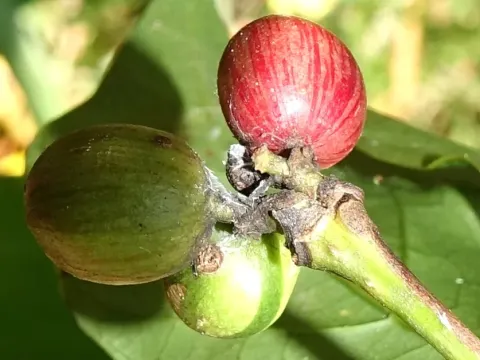
Excelsa coffee
Coffea excelsa
Excelsa coffee (Coffea excelsa), a member of the Rubiaceae family, is a distinct species of coffee tree that is now often classified as a variety of Liberica coffee. The plant is a robust tree that can reach heights of 15 to 20 meters in its natural habitat.
What the section contains
Excelsa coffee
This crop has specific climate requirements. It is capable of developing fully at higher temperatures and lower humidity levels than Arabica, which makes it resilient during dry seasons and periods of climatic instability.
Optimal soil conditions for Excelsa include deep, fertile loams with good drainage and a neutral pH level. The tree does not tolerate waterlogging, so areas with heavy clay soils require additional land improvement and drainage systems.
For normal growth, the crop requires stable temperatures ranging from 20°C to 28°C. Unlike other coffee species, Excelsa exhibits high tolerance to direct sunlight and can successfully grow in open areas without dense shading.
Agronomic management involves regular pruning to maintain crown shape and limit tree height, which is critical for efficient cherry harvesting on commercial plantations.
The economic use of Excelsa is limited, as its share of the global coffee market remains below one percent. The beans possess a tart, profound flavor with unique fruity undertones, making them a valuable component for premium coffee blends.
The yield of this variety is considered moderate; however, the tree is known for its high consistency in fruit production over many decades. Mature specimens are capable of producing stable yields for up to 30–40 years under proper agricultural practices.
The ripening period for Excelsa cherries is significantly longer than that of Arabica or Robusta. The fruits develop on the branches for up to 12 months, requiring a prolonged period without extreme weather conditions.
Harvesting is typically performed manually because cherries on a single tree may ripen unevenly. This necessitates multiple passes through the plantation to ensure the selection of perfectly ripe cherries.
Post-harvest, the cherries undergo standard processing; however, due to the unique structure of the fruit, the process requires strict control of fermentation times to reveal its distinctive aromatic profile.
The primary advantage of Excelsa is its natural resistance to several dangerous diseases. Specifically, it demonstrates a high level of resilience against fungal infections, such as coffee leaf rust (Hemileia vastatrix).
Despite its overall hardiness, the crop can suffer from attacks by the coffee berry borer, an insect that damages the beans inside the fruit. Controlling the population of this pest requires consistent monitoring.
The root system of the tree may be susceptible to nematode infestations in regions with contaminated soil. To prevent crop losses, the use of resistant rootstocks or proper crop rotation during the establishment of young plantations is recommended.
Excessive humidity during the flowering period can trigger fruit drop, negatively affecting total yields. Providing effective ventilation within the plantation is a key preventative measure against fungal leaf infections.
Regular inspection of trees and the removal of dry or infected branches form the basis of sanitary protection on plantations, which helps minimize the need for chemical pesticides.