
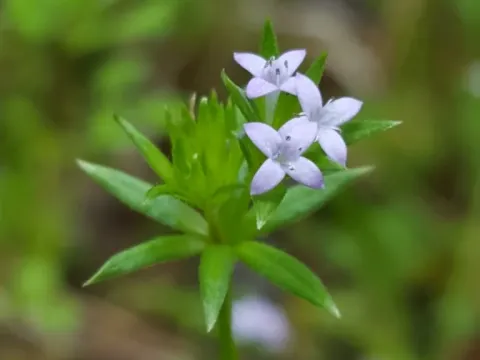
Field madder
Sherardia
Field madder (Sherardia arvensis) is the sole species in the genus Sherardia, belonging to the Rubiaceae family. This low-growing annual plant is widely distributed across Europe, Western Asia, and North Africa.
What the section contains

Field madder
Morphologically, the plant features square stems and whorled leaves, typically appearing in groups of four to six. The tiny, four-petaled flowers are pink or lilac and form terminal clusters protected by a leafy involucre.
It thrives in various soil types but prefers well-drained, fertile, or sandy loams. It is known for being a competitive colonizer in disturbed habitats and agricultural fields where nitrogen levels are sufficient.
The plant demonstrates a high level of climate adaptability, flourishing in temperate maritime and continental climates with adequate rainfall during the germination period.
While often considered an agricultural weed, field madder is an important botanical subject that showcases the distinctive reproductive strategies of the Rubiaceae family in temperate zones.
The primary threats to the survival of field madder populations in commercial agricultural settings are conventional herbicide programs and intensive soil tillage practices.
Fungal infections, such as mildew and various leaf spots, represent a significant threat during periods of high humidity and stagnant air, often leading to rapid plant decay.
Insects like aphids and certain species of beetles can cause substantial damage to the reproductive structures of the plant, potentially reducing seed set viability.
Competition from vigorous cereal or pulse crops effectively suppresses the growth of field madder by shading the soil surface and limiting resource availability.
Managing the plant involves early-season weeding and proper crop rotation to break the life cycle of the weed before it can establish a robust seed bank in the soil.