
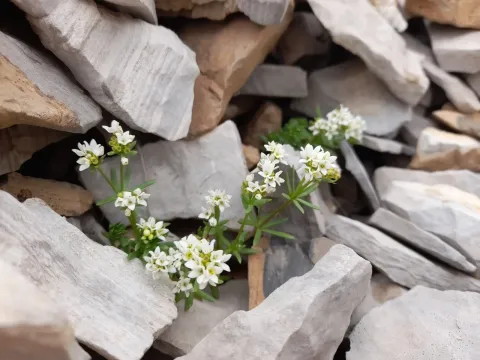
Heath bedstraw
Galium saxosum
Heath bedstraw (Galium saxatile) is a perennial herbaceous plant belonging to the Rubiaceae family. It is native to much of Europe, typically inhabiting heaths, moorlands, and rocky mountainous terrain.
What the section contains
Heath bedstraw
The plant is recognized for its prostrate or ascending stems that create dense, spreading mats. Its leaves are small, narrow, and arranged in whorls along the stem, contributing to its distinct botanical appearance.
Cultivation of this species requires well-drained, acidic soil conditions. It thrives in sandy or stony substrates and is highly intolerant of waterlogged environments, which often lead to root asphyxiation.
In terms of light exposure, the plant prefers full sun but demonstrates excellent tolerance for partial shade. When planted in sunny locations, it develops a more vigorous and compact habit, making it ideal for ground cover.
This hardy species exhibits strong winter survival capabilities in temperate climates. It is well-adapted to surviving harsh conditions, including high wind exposure and freezing winter temperatures without requiring additional protection.
Heath bedstraw is naturally robust and rarely susceptible to major agricultural pests. Its chemical defenses help protect it from many common insects that typically target ornamental or agricultural crops.
The most significant threats to the health of this plant are fungal infections, which are primarily triggered by poor drainage or excessive humidity. Root rot remains the most serious concern for established patches.
In humid or stagnant air conditions, foliage may be prone to powdery mildew. This is often an indication that the planting density is too high, preventing adequate airflow around the base of the stems.
Effective management includes maintaining a dry-to-moist soil regime and ensuring proper spacing between plants. It is crucial to monitor moisture levels closely during periods of high rainfall.
If disease symptoms emerge, integrated pest management practices should be followed, including the removal of infected debris and the targeted application of approved fungicides to prevent further spread.