
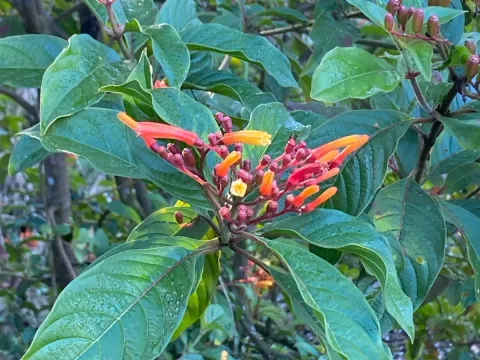
Hamelia
Hamelia
Hamelia is a genus of evergreen shrubs and small trees belonging to the Rubiaceae family. The most popular species, Hamelia patens, is widely recognized for its vibrant tubular flowers and nectar-rich properties that attract pollinators.
What the section contains


Hamelia
Native to the tropical and subtropical regions of the Americas, this plant thrives in warm climates. It is sensitive to frost and requires protection or indoor cultivation when temperatures drop below freezing point.
For optimal growth, Hamelia requires full sun exposure or partial shade. In its natural habitat, it adapts to various soil types, but it shows the best results when planted in well-drained, nutrient-rich, and slightly acidic soil.
Climate requirements include consistent warmth and protection from cold winds. When grown as a container plant, it needs to be moved to a greenhouse or a bright indoor location during the winter season to maintain its vigor.
Agricultural management involves regular pruning to keep the desired shape and promote dense flowering. Adequate watering during the peak growing season is necessary, while fertilization with a balanced mix supports healthy foliage and blossom development.
Common pests affecting Hamelia include spider mites, mealybugs, and whiteflies. These pests are particularly active in warm, dry indoor environments or greenhouses with poor air circulation.
Root rot is a significant concern for container-grown plants, often caused by excessive watering and poor soil drainage. Ensuring that the pot has proper drainage holes is a fundamental step in plant health management.
Fungal infections can develop if the environment is too humid without sufficient airflow. Thinning out the branches periodically improves ventilation and reduces the risk of powdery mildew or other fungal pathogens.
Integrated pest management, including the use of horticultural oils or insecticidal soaps, is effective for controlling minor infestations. Regular inspection is crucial for catching problems early and preventing significant damage.
Maintaining a clean cultivation area by removing fallen leaves and debris helps minimize the risk of pest and disease outbreaks. Healthy, well-fed plants are generally more resistant to environmental stressors and biological attacks.