
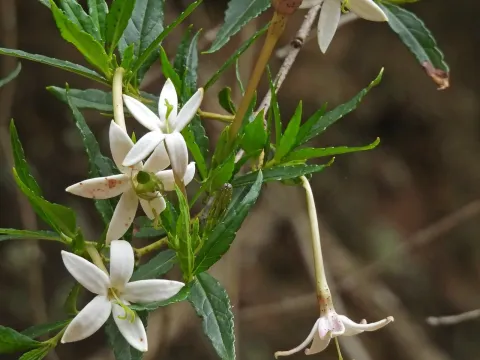
Heterophyllaea
Heterophyllaea
Heterophyllaea is a genus of flowering plants belonging to the family Rubiaceae. Native to the mountainous regions of South America, particularly in Argentina and Bolivia, these shrubs are well-adapted to high-altitude environments where environmental conditions are relatively harsh.
What the section contains

Heterophyllaea
The plant thrives in rocky, well-drained soils and is specifically adapted to areas with intense sunlight exposure. This high insolation is a critical component of its physiology, directly influencing the accumulation of specific pigments and toxic metabolites within its tissues.
Botanically, Heterophyllaea is characterized by its shrubby growth form, opposite leaves, and small, inconspicuous flowers. The plant's morphology allows it to persist in ecosystems where many other species might struggle due to temperature fluctuations and soil limitations.
Unlike commercial crops, Heterophyllaea is not cultivated for agricultural gain. Its presence is typically monitored by land managers and agronomists due to its status as a toxic invasive weed within native rangelands and grazing areas.
The agricultural importance of this genus is focused on range management rather than production. Maintaining healthy pastures necessitates knowledge of the botanical profile of Heterophyllaea to prevent accidental ingestion by grazing herds.
The primary concern regarding Heterophyllaea in an agricultural context is its potent toxicity to livestock. The plant contains compounds that induce severe photosensitization in animals, making their skin hypersensitive to ultraviolet light.
When livestock ingest the plant, they develop clinical symptoms including severe dermatitis, skin necrosis, and painful lesions on exposed skin areas. This condition can lead to significant morbidity and mortality, causing substantial economic distress in the livestock industry.
Management of the species involves mechanical eradication programs aimed at removing the shrubs from grazing plots. Effective control strategies often require repeated clearing efforts to ensure that the soil seed bank is depleted over several seasons.
Chemical control options using selective herbicides are available but must be applied with caution to preserve the biodiversity of the surrounding pastoral vegetation. Integrated pest management practices are generally considered the most sustainable way to limit its spread.
Ongoing monitoring of rangelands for early colonization by Heterophyllaea is the most effective preventative measure. By identifying and treating infestations early, farmers can significantly reduce the risk of livestock poisoning and maintain the overall productivity of their land.