
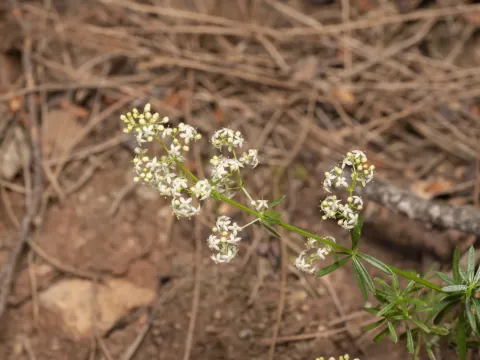
Heldreich's bedstraw
Galium heldreichii
Heldreich's bedstraw (Galium heldreichii) is a perennial herbaceous plant belonging to the Rubiaceae family. This species typically originates from mountain regions, which defines its specific ecological requirements and high adaptability to rocky or well-drained habitats.
What the section contains
Heldreich's bedstraw
The plant thrives in well-aerated, lime-rich soils that provide excellent drainage, preventing moisture stagnation around the root collar. Adequate soil fertility is important, though the species is generally resilient to nutrient-poor conditions typical of mountainous terrain.
Regarding climate, this plant prefers locations with moderate exposure to sunlight and cool, temperate air. It shows significant resistance to cold but performs best when protected from extreme, desiccating winds during the early spring development phase.
Agricultural management requires careful bed preparation, ensuring the soil is fine-textured to accommodate the germination of small seeds. Regular weeding during the first vegetative year is essential, as the young plants are sensitive to competition from aggressive weeds.
The crop is cultivated primarily for its medicinal properties, often utilized in the extraction of bioactive compounds. Proper moisture management during the flowering season is crucial to maximize the quality and quantity of the harvestable biomass.
The primary threats to Galium heldreichii include various fungal pathogens such as root rot and powdery mildew, which often develop in environments with poor air circulation or excessive moisture levels within the root zone.
Insects like aphids and spider mites can pose a risk during dry spells, potentially weakening the plant and reducing the overall medicinal value of the foliage. IPM (Integrated Pest Management) techniques, including biological control, are recommended for sustainable production.
Soil-borne nematodes may occasionally impact plant vigor in infested plots, making it vital to perform soil testing and appropriate crop rotation cycles to mitigate these long-term threats to agricultural productivity.
To maintain plant health, it is necessary to provide adequate space between rows, allowing for sufficient airflow. Overcrowding should be strictly avoided to prevent the rapid transmission of fungal spores during high-humidity periods.
Continuous monitoring of the field is necessary to identify early signs of nutrient deficiencies or pest damage. Swift intervention with approved horticultural practices ensures the longevity and yield potential of the planting area.