
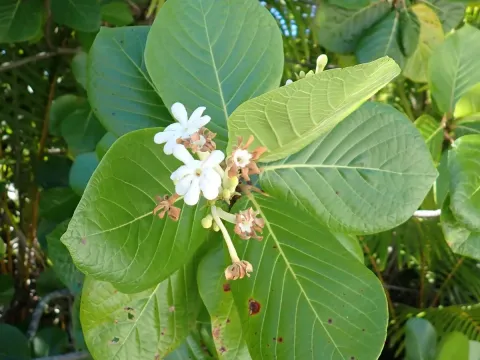
Guettarda
Guettarda
Guettarda is a diverse genus of evergreen trees and shrubs belonging to the Rubiaceae family. Native primarily to tropical regions of the Americas and the Pacific, these plants are renowned for their fragrant tubular flowers and dense foliage.
What the section contains
 Guettarda calyptrata
Guettarda costaricensis
Guettarda costaricensis
Guettarda calyptrata
Guettarda calyptrata
Guettarda costaricensis
Guettarda costaricensis
 Guettarda elliptica
Guettarda elliptica
Guettarda elliptica
 Guettarda platypoda
Guettarda platypoda
Guettarda platypoda
 Guettarda speciosa
Guettarda speciosa
Guettarda speciosa
 Guettarda uruguensis
Guettarda uruguensis
Guettarda uruguensis
 Guettarda valenzuelana
Guettarda valenzuelana
Guettarda valenzuelana
 Rough-leaf velvetseed
Guettarda scabra
Rough-leaf velvetseed
Guettarda scabra
Guettarda
These plants thrive in well-draining, nutrient-rich soil that mimics their native tropical habitat. It is essential to maintain a slightly acidic to neutral pH level to ensure the optimal absorption of micronutrients from the substrate.
Climate requirements for Guettarda are strictly tropical; they perform best in temperatures between 22 and 30 degrees Celsius. They cannot tolerate freezing conditions and require protection from chilling winds at all times.
Watering frequency should be adjusted according to the season, with a need for high humidity levels. In greenhouse cultivation, misters are recommended to keep the environment stable and prevent leaf desiccation.
Proper pruning is essential for Guettarda, as it helps to maintain an attractive shape and encourages the development of more flower buds. Regular fertilization with balanced NPK formulas supports vigorous growth during the active season.
The primary pests affecting Guettarda include scale insects and spider mites. These organisms can quickly multiply in dry indoor environments, causing significant damage to the underside of leaves.
Fungal issues, such as leaf spot and root rot, often occur due to poor drainage or excessive soil moisture. These conditions are highly detrimental and often require immediate repotting into fresh, sterile substrate.
Powdery mildew may appear on the foliage if air circulation is insufficient. Increasing ventilation and applying organic fungicides can effectively control the spread of these fungal pathogens.
Nutritional deficiencies are a common threat, often appearing as interveinal chlorosis. Providing regular micronutrient supplements ensures the foliage maintains its characteristic deep green color.
To ensure healthy development, it is necessary to monitor the plants closely and implement preventative treatments with neem oil or specialized systemic insecticides at the first sign of infestation.