
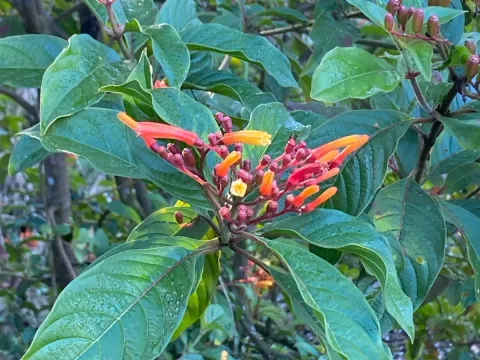
Hamelia
Hamelia Jacq.
Hamelia (Hamelia Jacq.) is a genus of evergreen shrubs and small trees belonging to the Rubiaceae family. Native to the tropical and subtropical regions of the Americas, these plants are widely recognized for their ecological role in supporting local avian pollinators.
What the section contains

Hamelia
The botanical structure of Hamelia is defined by whorled leaves and tubular, multi-colored flowers that usually range from yellow to deep red. These plants thrive in environments that mimic their natural habitat, requiring high levels of light to maintain their vibrant foliage and continuous blooming.
Successful cultivation of Hamelia necessitates well-drained soil rich in organic matter. While the plant is drought-tolerant once established, it displays optimal growth rates when provided with consistent moisture during the peak of the growing season.
Temperature management is critical, as the genus is sensitive to freezing conditions. In climates outside of the tropical belt, Hamelia is typically cultivated as a container plant that must be moved indoors or to a greenhouse during colder months.
Routine pruning is a fundamental aspect of managing Hamelia, as the plants can grow vigorously and become sparse if not shaped regularly. Fertilization should be focused on phosphorus-rich formulas to ensure consistent flower production throughout the year.
Common pests affecting Hamelia include aphids, spider mites, and scale insects, particularly when grown in controlled or indoor environments. Early detection and the application of horticultural oils or insecticidal soaps are standard protocols for pest suppression.
Pathogenic threats usually involve root-related issues stemming from overwatering or poor soil aeration. Growers should monitor moisture levels carefully to prevent the development of root rot, ensuring that containers or planting beds have adequate drainage holes.