
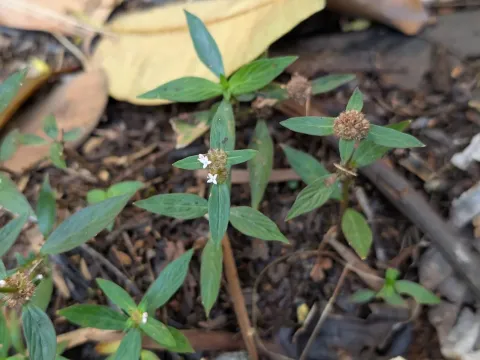
Hemidiodia
Hemidiodia
Hemidiodia is a genus of flowering plants belonging to the family Rubiaceae. These plants are primarily native to the tropical and subtropical regions of the Americas, where they inhabit diverse ecological niches.
What the section contains
Hemidiodia
The plant exhibits typical characteristics of the Rubiaceae family, including opposite leaves often with stipules and small, structurally simple flowers. Its growth habit is primarily herbaceous, often forming dense clusters in favorable environmental conditions.
Hemidiodia thrives in warm, humid climates with regular rainfall. It is highly adaptable to various soil types, ranging from sandy loams to heavier tropical soils, which allows it to successfully colonize disturbed habitats like roadsides and agricultural fields.
From an agricultural standpoint, Hemidiodia is frequently managed as a weed due to its aggressive growth patterns. It competes with crops for moisture and nutrients, necessitating regular weeding practices to maintain productivity in tropical plantations.
Ongoing botanical research focuses on the distribution and genetic diversity of the genus. Understanding the life cycle of Hemidiodia is essential for effective vegetation management and for studying the succession of plant life in tropical forest margins.