
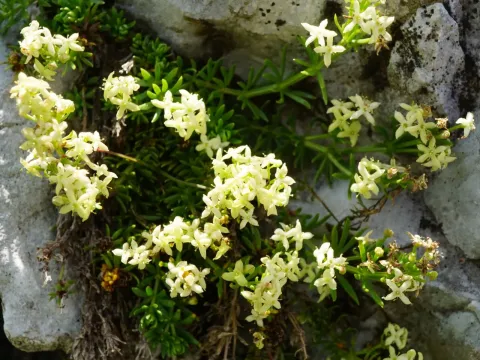
Noricum bedstraw
Galium noricum
Noricum bedstraw (Galium noricum) is a herbaceous perennial belonging to the Rubiaceae family. This species is native to specific mountainous regions, primarily within the Eastern Alps, where it occupies distinct high-altitude niches.
What the section contains
Noricum bedstraw
As a crop, it requires conditions that mimic its natural alpine habitat, specifically well-drained, lime-rich rocky soils. Its botanical structure is adapted to withstand significant temperature fluctuations and high UV exposure characteristic of alpine meadows.
The plant demonstrates a compact growth habit, which is an evolutionary adaptation to harsh wind conditions. In agricultural settings, it requires full sunlight to maintain its structural integrity and metabolic activity throughout the growing season.
Soil composition should be light and alkaline, avoiding acidic environments that can inhibit its growth. Proper aeration of the root zone is vital to prevent root decay, which is common if the soil remains waterlogged for extended periods.
Agrotechnical practices focus on mimicking these natural conditions by using mineral-rich, porous substrates. Fertilization should be kept to a minimum, as the species is accustomed to nutrient-poor soils and may suffer from over-fertilization.
Fungal pathogens are the primary concern for this crop, particularly those affecting the roots and the lower stem. High humidity and poor drainage create the perfect environment for the development of these soil-borne diseases.
Insect pests, such as aphids, can cause significant damage to the soft tissues of the plant. Monitoring should occur regularly during the peak growing season to manage pest populations before they reach economic damage thresholds.
Weed management is critical, as Noricum bedstraw lacks strong competitive abilities against vigorous invasive weeds. Mechanical weeding must be done carefully to avoid damaging the shallow root system of the crop.
Climatic stress during the dormant season, specifically the lack of snow cover combined with extreme frost, can weaken the plant. Applying a layer of loose mulch or gravel can protect the base of the plant from extreme temperature fluctuations.
Disease management strategies should emphasize preventative measures such as optimal plant spacing and air circulation. If chemical intervention is necessary, products designed for sensitive alpine species should be applied sparingly.