
Hillia
Hillia
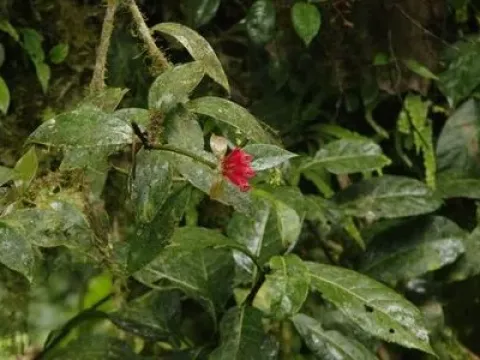
Hillia is a genus of evergreen plants belonging to the Rubiaceae family. Naturally occurring in the tropical rainforests of Central and South America, these plants typically grow as epiphytes, anchoring themselves to tree bark where they can access filtered sunlight and moisture.
What the section contains

Hillia
The botanical structure of the plant features leathery, opposite leaves and impressive, solitary, funnel-shaped flowers that are usually white. These blossoms are known for their nocturnal fragrance, designed to attract specific moth pollinators in their native forest habitats.
Cultivation requirements for Hillia focus heavily on replicating its native tropical environment. The plant requires consistently high humidity levels and avoids direct exposure to harsh, drying winds, preferring the diffused light found under a forest canopy.
The substrate must be highly specialized, mimicking the porous nature of tree bark. A mixture consisting of orchid bark, perlite, and high-quality sphagnum moss is ideal to prevent root compaction and ensure proper air circulation for the sensitive root system.
In terms of practical application, Hillia serves as a premium ornamental plant for tropical greenhouses and botanical collections. Its elegant appearance and unique flowering habit make it a prized specimen for indoor exotic garden displays that provide stable greenhouse conditions.
The most significant threat to Hillia health is root rot caused by stagnant water in the planting medium. Because the plant naturally grows as an epiphyte, its roots require regular cycles of hydration and drying, and poor drainage will quickly compromise its structural integrity.
Pest management is another key area of care, as the plant is susceptible to spider mites and mealybugs. These pests flourish in dry, poorly ventilated conditions, making regular misting and careful monitoring of leaf undersides essential practices for all growers.