
Hoffmannia
Hoffmannia
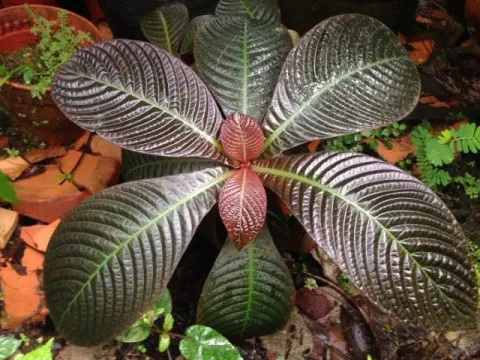
Hoffmannia is a genus of perennial plants in the Rubiaceae family, native to tropical regions of Central and South America. These plants are primarily cultivated for their foliage, which often features unique color patterns, velvety textures, and deep veins.
What the section contains


Hoffmannia
Botanically, these plants are characterized by succulent-like stems and opposite leaves. Their native habitat includes the dense, humid understories of tropical forests, which informs their specific requirement for high humidity and protection from direct, intense sunlight throughout the year.
Temperature management is critical for the healthy development of Hoffmannia. The ideal growing conditions require a consistent climate between 20°C and 25°C. Exposure to temperatures below 15°C often results in irreversible cold stress, causing leaf necrosis and stunting of growth.
Soil composition must be highly porous to ensure efficient drainage. A blend of peat, vermiculite, and aged organic compost provides the best structure for root expansion. Ensuring a proper balance of aeration and moisture retention is the most important factor in the agronomic success of this crop.
Maintenance practices involve regular misting to simulate high-humidity tropical environments and the application of balanced liquid fertilizers. During the dormant winter season, nitrogen inputs should be minimized to prevent weak, etiolated growth that often occurs in low-light conditions.
Spider mites are the most persistent pests for Hoffmannia, thriving in the warm, dry indoor environments often provided for this plant. If left untreated, they quickly colonize the leaf undersides, causing significant chlorosis and eventual leaf drop.
Mealybugs also pose a substantial risk, often settling in the complex structures where leaves meet the stems. Manual removal combined with systemic or contact insecticides is often required to maintain plant vigor during a severe infestation.
Root and stem rot caused by Pythium or Rhizoctonia fungi remain the primary health hazards in production greenhouses. These diseases are almost always linked to overwatering or poor drainage systems. Implementing a strictly managed irrigation protocol is the primary defense strategy against these pathogens.