
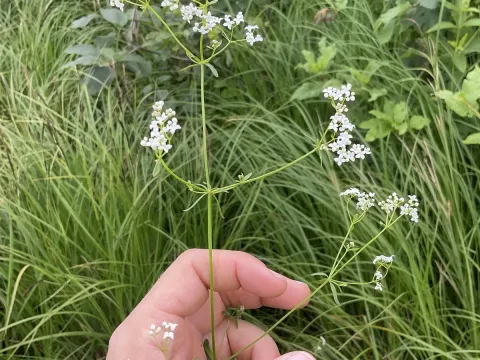
Fen bedstraw
Galium elongatum
Fen bedstraw (Galium elongatum) is a perennial herbaceous plant belonging to the Rubiaceae family. This species is native to European wetlands and is known for its ability to thrive in saturated soil conditions.
What the section contains
Fen bedstraw
The plant grows optimally in nutrient-rich, moist to waterlogged substrates. It is frequently found along the edges of ponds, marshes, and in wet woodland habitats where soil moisture remains constant throughout the year.
Botanically, it is distinguished by its elongated, upright stems and characteristic whorled leaves. These features allow the plant to compete effectively for light within the dense vegetation typical of wetland environments.
The climatic requirements include a temperate environment with high annual rainfall or proximity to permanent water bodies. It does not tolerate prolonged drought conditions, which can lead to rapid wilting.
In terms of agricultural use, it serves as a component of wild meadow hay. Its presence in pastures contributes to the diversity of available forage, providing beneficial nutrients to grazing livestock in riparian zones.
Fungal diseases are a primary concern for this species, especially during humid summer months when rust and leaf spot pathogens spread rapidly through the foliage.
Insect pests, such as specific leaf beetles, can cause significant defoliation, reducing the overall biomass and vigor of the plants if infestation levels become high.
Environmental changes, particularly land drainage projects, pose a severe threat to the population of Galium elongatum as it is strictly dependent on high water tables.
Competitive pressure from invasive grasses and woody species can suppress the growth of fen bedstraw, leading to its displacement in degraded or changing wetland habitats.
To mitigate these threats, maintain stable water levels and monitor for early signs of fungal infection or herbivore damage to ensure the health of the meadow ecosystem.