
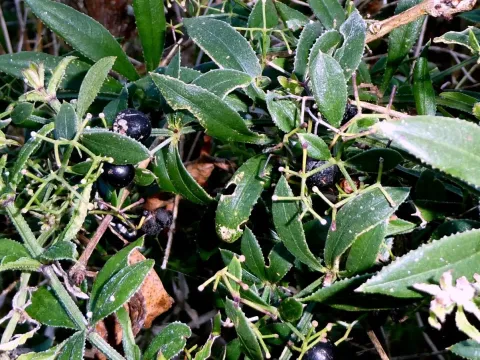
Dyer's madder
Rubia
Sowing of Dyer's madder is primarily conducted in the spring, once the soil has warmed to 10–12°C, or in late autumn in regions with mild winters. The seeds are characterized by low germination energy, so it is recommended to stratify them for 1–2 months at low positive temperatures before sowing.
What the section contains

Dyer's madder
The optimal sowing depth is 2–3 centimeters in heavy soils and up to 4 centimeters in light sandy substrates. Row spacing should be at least 60–70 centimeters to ensure effective mechanical weeding and sufficient sunlight access for the developing plants.
During the first year of life, madder grows very slowly, forming only a small rosette of leaves and gradually expanding its root system. This makes the crop vulnerable to weeds, so maintaining field cleanliness during the early stages of growth is crucial for establishing a healthy stand.
The seeding rate is approximately 10–12 kilograms per hectare, provided the seeds have a high germination rate. Using high-quality seed material allows for uniform emergence and helps avoid the need for reseeding the field.
In subsequent years, vegetative propagation is possible using root cuttings of 10–15 centimeters in length. This method is often preferred over seeding as it ensures faster establishment and more vigorous biomass accumulation of the marketable roots.
Dyer's madder prefers sunny, well-lit areas, as shade significantly reduces the concentration of anthraquinones in the roots. The crop is demanding regarding soil structure: the most suitable soils are fertile, light loams or sandy loams with a neutral or slightly alkaline pH.
The plant possesses moderate drought tolerance; however, regular irrigation is required during critical developmental phases to ensure a high root yield. Excess moisture and high water tables can cause root rot, so fields must be equipped with good drainage systems.
The optimal temperature for active growth ranges from 20–25°C. While the aerial parts may suffer from frost in early spring, the robust root system is capable of overwintering in the soil even at significant sub-zero temperatures, provided the ground is sufficiently frozen.
Incorporating organic fertilizers, such as compost or manure, before deep plowing is a mandatory condition for ensuring soil fertility. Madder responds well to phosphorus-potassium fertilizers, which promote better root development and the accumulation of biologically active substances.
As a member of the Rubiaceae family, this perennial herbaceous plant stays in the same location for several years, depleting soil nutrients. Therefore, it is important to follow a strict crop rotation cycle and avoid returning the crop to the same field for at least 5–6 years.
The yield of Dyer's madder depends significantly on the plant's age and environmental conditions. The maximum accumulation of dye and medicinal compounds in the roots occurs at 3–4 years of age, which is why commercial harvesting is usually planned for this period.
Average yields of dry roots range from 2 to 5 tons per hectare when all agricultural standards are met. This figure correlates directly with plant density and the quality of plantation management during the first two years of growth.
The content of valuable components, such as ruberythric acid and alizarin, also depends on the agronomic background and the region of cultivation. Optimal conditions contribute not only to higher root weight but also to the quality of the raw material, which is highly valued in the pharmaceutical and textile industries.
To assess plantation productivity, agronomists conduct trial excavations in several parts of the field. This analysis helps determine the biological maturity of the roots and allows for informed decisions regarding the optimal timing for a mass harvest to achieve the highest product output.
The process of drying the roots after harvest requires strict control of temperature settings to preserve the chemical stability of active ingredients. Proper drying reduces raw material moisture to 12–14%, ensuring long-term storage without quality degradation.
Dyer's madder is relatively resistant to diseases; however, improper management, especially in waterlogged soils, can lead to root rot. Fungal pathogens spread rapidly under stagnant moisture conditions, leading to significant yield loss.
Leaf rust is another common disease that arises in dense plantings with high air humidity. Symptoms manifest as reddish-brown spots on the leaves, which lead to premature drying of the foliage and overall weakening of the plant.
Among pests, wireworms and white grub larvae pose the greatest danger as they damage the madder rhizomes. These soil-dwelling pests can significantly reduce the marketability of the product and cause the death of young plants during the rooting stage.
Aphids can infest young shoots in the first half of summer, sucking sap and inhibiting the growth of the aerial parts. Insecticides are used for control during active growth, provided that strict safety intervals are observed before the harvesting period.
Disease prevention involves maintaining proper spatial isolation, using clean planting material, and regular inter-row cultivation. Suppressing weed growth also minimizes the creation of favorable conditions for pest outbreaks and pathogen development.
Harvesting Dyer's madder is a labor-intensive process requiring specialized machinery for deep soil undercutting. Since the roots reach depths of up to 30–40 centimeters, standard plowing is insufficient to extract the entire marketable volume.
The optimal time for harvest is the autumn of the third or fourth year of growth, when the aerial parts begin to yellow and die back. During this phase, the concentration of alizarin and other valuable anthraquinones in the roots reaches its peak.
The process involves undercutting, extracting the roots from the soil, and initial cleaning from dirt and plant debris. It is important to conduct harvesting when the soil moisture is moderate to minimize losses of small roots and avoid damaging the bulk of the harvest.
After collection, the raw material must be thoroughly washed in running water to remove residual soil, a critical step for obtaining a quality product. Contaminated raw materials are typically rejected by processing plants and pharmaceutical manufacturers.
Subsequent processing includes cutting the roots into uniform fragments and drying them in specialized ovens at temperatures not exceeding 50–60°C. Overheating the raw material leads to the degradation of active ingredients, reducing its market value.