
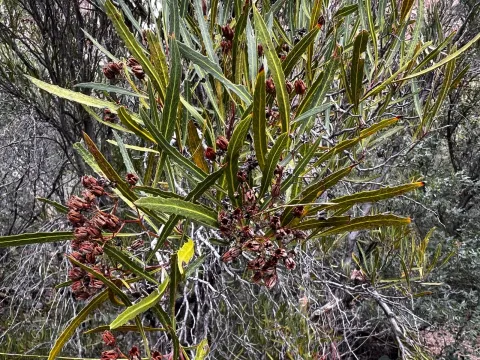
Vauquelinia
Vauquelinia
Vauquelinia is a genus of evergreen trees and large shrubs that belongs to the Rose family (Rosaceae). These plants are well-adapted to the rugged terrains of the southwestern United States and Northern Mexico.
What the section contains
Vauquelinia
The natural habitat of this genus is characterized by dry, rocky canyons and slopes. As a drought-tolerant species, it has evolved to thrive in environments where water is scarce and sunlight is intense throughout the year.
To successfully cultivate Vauquelinia, one must ensure excellent soil drainage. Heavy clay soils are generally unsuitable, as the root system requires significant oxygen and is highly sensitive to waterlogging.
The plant is highly valued in arid climate landscaping due to its evergreen foliage and attractive clusters of white flowers. It requires full sun exposure and performs best when allowed to develop in warm, dry conditions.
Maintenance involves minimal irrigation once the plants are established. Pruning can be done to maintain the desired shape or to encourage denser growth, as the plant responds well to controlled trimming.
Root rot is the most significant threat to Vauquelinia, usually caused by improper watering practices. Ensuring that the soil remains well-drained is the primary defense against such fungal infections.
Insect pests such as aphids and scale insects may occasionally infest the foliage. While these rarely kill mature trees, they can detract from the plant's aesthetic value and slow down growth rates.
Powdery mildew may occur if the plant is grown in areas with high humidity or poor air circulation. Proper spacing between trees is essential to prevent the spread of fungal spores in damp weather.
Fire blight, a common disease in many members of the Rosaceae family, can potentially affect Vauquelinia. Affected branches should be pruned back to healthy wood and removed from the site to avoid spread.
Vigilant monitoring for early signs of disease or pest activity is recommended for professional landscapes. Maintaining optimal vigor through proper site selection is the best preventative strategy.