
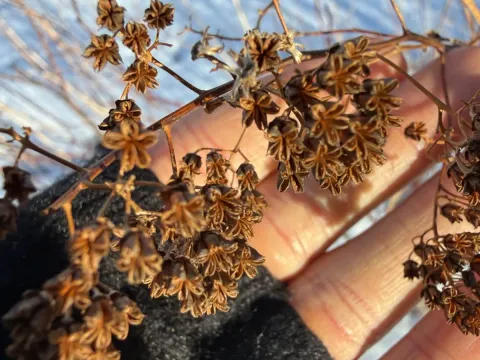
Spiraea
Spiraea L.
Spiraea (Spiraea L.) is a significant genus of deciduous flowering shrubs belonging to the Rosaceae family. With approximately 100 species, these plants are native to the temperate regions of the Northern Hemisphere, showing remarkable adaptability to diverse habitats ranging from forested areas to arid steppes.
What the section contains
 Birchleaf spirea
Spiraea betulifolia Pall.
Birchleaf spirea
Spiraea betulifolia Pall.
 Bridal wreath spirea
Spiraea prunifolia Siebold & Zucc.
Bridal wreath spirea
Spiraea prunifolia Siebold & Zucc.
 Bridal wreath spirea
Spiraea prunifolia Siebold & Zucc. f. simpliciflora Nakai
Bridal wreath spirea
Spiraea prunifolia Siebold & Zucc. f. simpliciflora Nakai
 Fritsch spirea
Spiraea fritschiana x Spiraea japonica
Fritsch's spiraea
Spiraea fritschiana C. K. Schneid.
Fritsch spirea
Spiraea fritschiana x Spiraea japonica
Fritsch's spiraea
Spiraea fritschiana C. K. Schneid.
 Hayata spiraea
Spiraea hayatana H. L. Li
Hayata spiraea
Spiraea hayatana H. L. Li
 Japanese spirea
Spiraea japonica L. f.
Japanese spirea
Spiraea japonica L. f.
 Nippon spirea
Spiraea nipponica Maxim.
Nippon spirea
Spiraea nipponica Maxim.
 Reeves spirea
Spiraea cantoniensis Lour.
Reeves spirea
Spiraea cantoniensis Lour.
 Spiraea cinerea
Spiraea x cinerea Zabel
Spiraea hayatana x japonica
Spiraea hayatana x Spiraea japonica
Spiraea cinerea
Spiraea x cinerea Zabel
Spiraea hayatana x japonica
Spiraea hayatana x Spiraea japonica
 Spiraea media
 Schmidt
Spiraea media
Spiraea media Schmidt
 Thunberg spirea
Spiraea thunbergii Siebold ex Blume
Thunberg spirea
Spiraea thunbergii Siebold ex Blume
 Vanhoutte spirea
Spiraea x vanhouttei (Briot) Zabel
Vanhoutte spirea
Spiraea x vanhouttei (Briot) Zabel
Spiraea
Botanically, Spiraea species are characterized by fibrous root systems and varied foliage patterns. Their reproductive strategy involves producing clusters of small, five-petaled flowers. Depending on the species, blooming occurs in spring or summer, which is the primary factor determining the physiological cycle and management strategy.
The crop thrives in sunny locations with well-drained, fertile soils with a pH ranging from slightly acidic to neutral. Spiraea is highly regarded for its excellent cold hardiness and robustness against harsh environmental conditions, making it a reliable choice for commercial and residential landscaping.
Agronomic management requires consistent irrigation during the growth phase, periodic soil aeration, and the application of balanced NPK fertilizers in early spring. Systematic pruning is essential; it must be timed specifically to the flowering period of the individual species to ensure healthy development and optimal bloom density.
Economically, Spiraea is utilized extensively in the nursery industry, urban greenery, and landscaping. It is highly valued for creating sustainable hedges, soil stabilization on embankments, and as a primary component in urban green infrastructure due to its resilience and ease of propagation.
Common pests affecting Spiraea include aphids and spider mites, which can cause leaf chlorosis and growth retardation. Integrated pest management strategies, utilizing selective insecticides and miticides, are recommended to maintain plant health and prevent the spread of infestations within the plot.
Fungal pathogens such as powdery mildew pose a risk, particularly under conditions of high humidity and poor air circulation. Effective control measures include implementing proper spacing between shrubs to promote aeration and applying preventative fungicide sprays when environmental conditions favor disease development.