
Soulié rose
Rosa soulieana
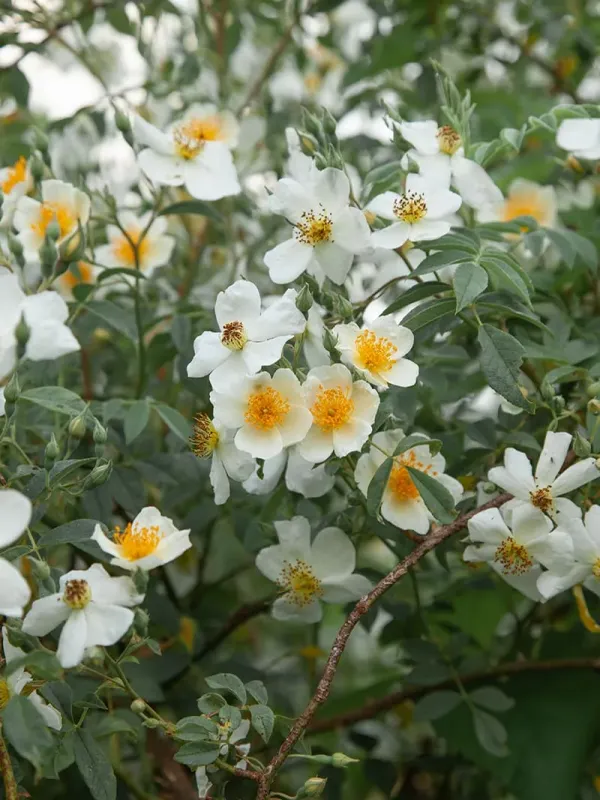
Description
Growing requirements
The Soulié rose (Rosa soulieana) is a member of the Rosaceae family. It is recognized as a vigorous, arching shrub that can reach significant heights, making it an excellent candidate for large-scale landscaping and wild hedges.
Originating from Western China, this species is well-adapted to high-altitude environments. Its evolutionary history has made it exceptionally hardy, allowing it to thrive in varied climates where more delicate ornamental rose species might struggle.
This shrub requires full sun exposure to maintain its health and bloom profusely. Providing adequate spacing is essential, as the plant can develop a wide, spreading habit that needs room to breathe and capture light efficiently.
The ideal soil for Rosa soulieana is well-drained, fertile, and slightly loamy. While it is tolerant of various soil conditions, it performs best when the soil is enriched with organic matter, ensuring consistent moisture levels throughout the growing season.
Maintenance is relatively simple, focusing on deep, infrequent watering during the establishment phase. Once mature, the plant displays good drought resistance, although supplemental water during extreme heat will enhance its foliage density.
Main diseases and pests
One of the primary benefits of this species is its high natural resistance to common rose diseases. However, in poorly ventilated sites or regions with excessive humidity, leaf spot or mildew can occasionally occur on the foliage.
Aphids are the most common pest observed on the young growth of the Soulié rose. Early identification is key; checking the new shoots during the spring season allows for quick intervention if the aphid population begins to increase.
Spider mites can be an issue during long, hot, and dry summer periods. They typically appear on the undersides of leaves, and their presence can be mitigated by maintaining proper air circulation and using gentle irrigation methods.
Preventative cultural practices, such as removing fallen leaves and pruning dead wood, go a long way in sustaining plant health. These simple actions prevent the buildup of fungal spores and ensure the energy is directed towards new growth.
When selecting treatments, always prioritize biological controls to protect garden biodiversity. Targeted applications should only be utilized as a last resort, ensuring that the ecological balance around the shrub is maintained.