
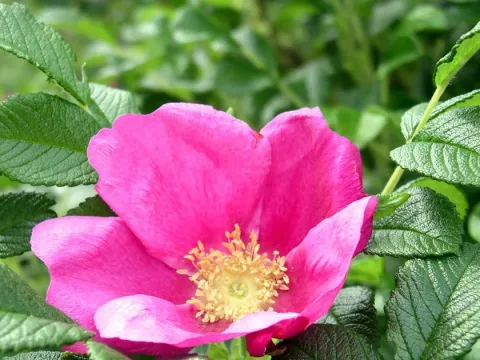
Ruga rose
Rosa ruga
The Ruga rose (Rosa ruga) is a classic hybrid belonging to the Rosaceae family. It is a historical cross between Rosa chinensis and Rosa arvensis, prized for its vigorous growth habit and delicate, fragrant, pale-pink flowers that bloom in clusters.
What the section contains
Ruga rose
This shrub requires a location with full sunlight to partial shade to thrive. It is not overly demanding regarding soil type, but it performs best in deep, well-draining, slightly acidic to neutral garden soil with a high content of organic matter.
Climate adaptability is one of the strengths of this variety. It prefers temperate zones where winters are not excessively harsh. In colder climates, providing a layer of mulch around the base of the plant is recommended to insulate the roots during the dormant season.
Watering management is crucial, especially for young plants. Consistent moisture is needed to establish a strong root system, but once mature, the plant is moderately drought-tolerant. Avoid overhead watering to prevent moisture-related leaf diseases.
Regular maintenance involves pruning spent blooms to encourage potential re-blooming and thinning out old wood to maintain proper airflow within the canopy. Annual mulching with composted manure ensures the availability of nutrients throughout the growing season.
Aphids represent the primary pest challenge, frequently congregating on the succulent tips of young shoots. Regular monitoring and the application of mild insecticidal soaps are usually sufficient to control infestations.
Powdery mildew is a common fungal threat, particularly in late summer when temperature fluctuations between day and night occur. Maintaining adequate spacing between bushes is the best preventative measure against this pathogen.
Black spot is a fungal disease that can lead to premature defoliation if left unchecked. It is highly advisable to remove and destroy all fallen leaves in the autumn to reduce the inoculum load for the following spring.
Rust, characterized by orange pustules on the underside of leaves, can occur in stagnant, humid conditions. Fungicide applications containing copper or sulfur are standard treatments to mitigate damage.
Integrated pest management strategies should be adopted to ensure the long-term health of the rose bushes, focusing on habitat management, plant nutrition, and the use of environmentally friendly control agents.