
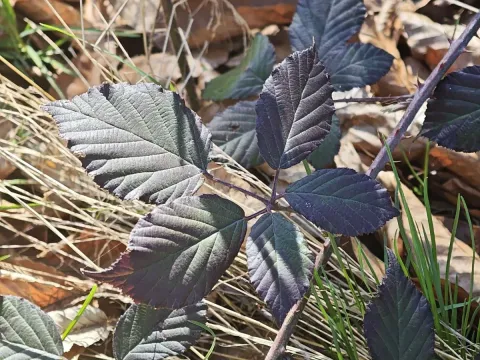
Mountain blackberry
Rubus montanus
Mountain blackberry (Rubus montanus) is a perennial shrub belonging to the Rosaceae family, known for its resilience and adaptation to mountainous ecological niches.
What the section contains
Mountain blackberry
The plant thrives in well-drained, fertile soils with a slightly acidic profile, which provides optimal conditions for its fibrous and deep root system.
Climatic requirements focus on a temperate regime with sufficient moisture during the spring vegetative phase and moderate sunlight throughout the summer period.
For agricultural production, it is essential to select sites with good airflow to minimize the humidity levels around the foliage, preventing common fungal issues.
Regular soil cultivation and the addition of organic matter are necessary to maintain the nutrient levels required for vigorous cane growth and productive harvest.
The commercial utilization of Rubus montanus is driven by the high nutritional value of its berries, which are rich in vitamins, fibers, and antioxidants.
These berries are highly sought after by the food processing industry for producing jams, syrups, and health-focused beverage concentrates.
Yield performance is highly dependent on the plant management techniques, specifically annual pruning of biennial canes and proper support via trellis systems.
Providing adequate irrigation during the fruit-ripening stage is critical to ensure both size and sweetness, which directly impacts the market value of the crop.
Through systematic cultivation, growers can achieve consistent yields, leveraging the plant's natural ability to adapt to diverse climatic conditions.
Common plant health threats include fungal diseases such as gray mold (Botrytis) and anthracnose, which are favored by periods of excessive moisture and poor ventilation.
Pests, particularly the raspberry beetle and various species of mites, can affect bud development and fruit quality if not managed through timely intervention.
Sanitation practices, including the removal of dead or infected canes immediately after harvest, are the most effective way to maintain a healthy plantation.
Integrated pest management strategies often focus on maintaining a clean plantation area and monitoring the population of beneficial insects for biological control.
- Installation of vertical trellis for better air circulation.
- Early removal of old and damaged canes.
- Regular soil testing to optimize nutrient balance.
The harvesting process requires careful handling, as Rubus montanus berries are delicate and highly prone to mechanical bruising if not managed correctly.
Selective harvesting is mandatory, as fruits on a single cane reach maturity at different intervals, requiring multiple passes over the plantation throughout the season.
Harvesting should ideally be conducted during the cooler hours of the morning to keep the berry temperature low, which significantly improves shelf life.
Once gathered, the fruit should be transported to cold storage facilities to quickly remove field heat and stabilize the product for storage or transport.
Proper harvest logistics, including the use of shallow ventilated containers, is key to maintaining high market quality and minimizing post-harvest losses.