
Mountain avens
Geum montanum
Description
Sowing dates
Mountain avens propagation is best achieved by sowing seeds in late autumn, as they require a period of stratification to break dormancy successfully.
When sowing in the spring, seeds should be kept in a cold environment for at least four weeks before being sown into seed trays to improve germination rates.
Seeds should be surface-sown or covered with a very light layer of soil, as light exposure is often necessary to stimulate the germination process.
Maintain consistent moisture in the germination medium and keep temperatures between 18–20 degrees Celsius for optimal seedling development.
Transplanting to the final location is recommended after the last frost, ensuring each plant has adequate space to establish its rosette of leaves.
Growing requirements
Geum montanum, a member of the Rosaceae family, is naturally adapted to the harsh conditions of high-altitude alpine meadows and rocky terrain.
The plant demands well-draining, slightly gritty or sandy soil; waterlogged conditions are highly detrimental and often lead to root rot.
Full sun is ideal for this species, though it can tolerate partial shade in hotter climates to protect the foliage from mid-day scorching.
It is remarkably cold-hardy and thrives in environments that replicate its natural alpine habitat, making it an excellent choice for rock gardens.
Regular but moderate watering is necessary; the goal is to keep the soil moist but never saturated, especially during the active growing season.
Yield
As a non-agricultural ornamental plant, Mountain avens does not have yield metrics; its success is measured by its aesthetic contribution to the landscape.
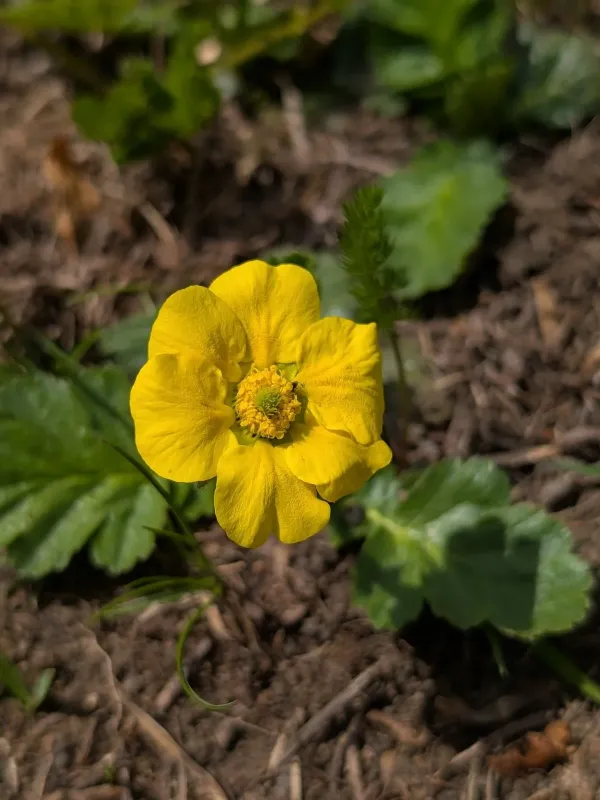
A well-cultivated plant produces a dense basal rosette and numerous bright golden-yellow flowers, typically peaking between late spring and early summer.
Deadheading spent flowers is highly recommended, as it encourages the plant to maintain a tidy appearance and may stimulate a second flush of bloom.
When grown in suitable conditions, the plant remains perennial and can provide ground cover for several years before needing division for rejuvenation.
The value of the crop lies in its ability to resist environmental stresses while providing high-impact visual color in challenging garden conditions.
Main diseases and pests
The primary threats to Geum montanum are fungal pathogens, which frequently arise in areas with poor drainage or excessive humidity.
Aphids can be a significant pest, particularly during warm and dry periods, targeting the tender buds and reducing the overall flowering potential.
If powdery mildew appears on the foliage, immediate intervention with fungicide and improved air circulation around the plants are necessary.
Root rot is the most common cause of failure in cultivation, typically caused by overwatering or planting in dense, heavy clay soils without amendments.
- Monitor foliage regularly for signs of chlorosis or wilting.
- Improve soil structure by adding grit or gravel to facilitate drainage.
- Apply insecticidal soap to treat early infestations of aphids.
- Remove infected plant debris to prevent the overwintering of pathogens.