
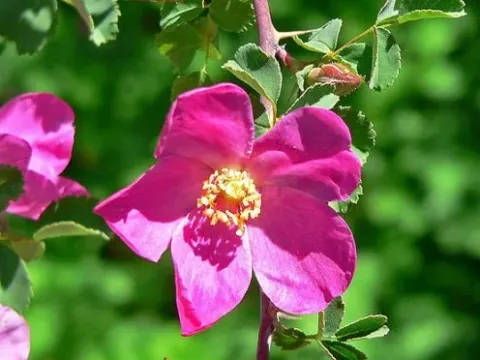
Multibracteate rose
Rosa multibracteata
The multibracteate rose (Rosa multibracteata) is a distinctive shrub species belonging to the Rosaceae family. Native to the mountainous regions of China, this plant is well-adapted to rocky terrains and forest margins, showcasing resilience in diverse environmental conditions.
What the section contains
Multibracteate rose
Botanically, it is recognized by its gracefully arching stems and delicate foliage. The defining feature is the presence of numerous conspicuous bracts situated beneath the flowers, which gives the plant its scientific name and unique appearance during the flowering season.
Regarding soil requirements, the species prefers well-drained, fertile soil with a slightly acidic to neutral pH level. It thrives in open, sun-exposed locations, which are essential for stimulating vigorous growth and ensuring a prolific display of its characteristic flowers.
Cultural practices include consistent watering during the growing season, though care must be taken to avoid waterlogged conditions, which can lead to root health issues. Mulching is recommended to maintain soil temperature and moisture levels throughout the summer.
The ornamental value of this rose makes it a popular choice for landscape architecture. It is frequently utilized in informal garden settings, restoration of slopes for soil stabilization, and as a structural element in shrub borders due to its elegant habit.
The species is susceptible to common rose ailments such as powdery mildew and black spot. To mitigate these risks, it is essential to ensure adequate spacing between plants to facilitate airflow, which is critical for preventing fungal outbreaks.
Pests like aphids and spider mites are known to infest the plant, primarily during hot and dry spells. Effective management involves monitoring the underside of leaves and applying appropriate horticultural oils or specific insecticides when pest populations exceed acceptable thresholds.