
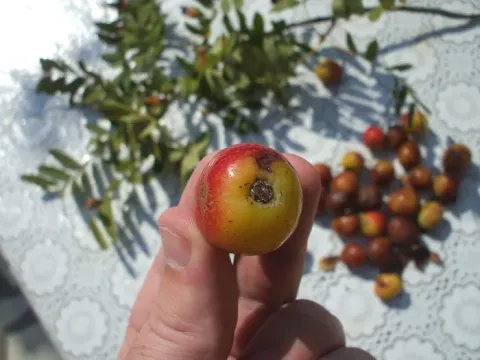
Mountain ash
Sorbus epidendron
Planting mountain ash (Sorbus) is most commonly done using saplings, as the seed propagation method requires stratification and takes a significant amount of time. The optimal period for planting is early spring before sap flow begins or autumn, two to three weeks before the onset of persistent frosts.
What the section contains
Mountain ash
For spring planting, the soil should be prepared in the autumn by applying organic and mineral fertilizers. In regions with severe winters, spring planting is preferred so that the root system has time to adapt to new conditions before the ground freezes.
When establishing mountain ash orchards, seedlings should be spaced 4–6 meters apart, depending on the vigor of the specific cultivar and the crown formation. This ensures sufficient light exposure and ventilation, which helps prevent fungal diseases.
To speed up the establishment of the saplings, it is recommended to use root stimulants, followed by deep watering after planting. Compacting the soil around the base of the tree facilitates better contact between the roots and the soil, preventing air pockets.
The crop is relatively low-maintenance, but adhering to the correct planting timing is critical for developing a strong skeletal system in the tree, which is necessary to support the weight of future harvests.
Mountain ash belongs to the Rosaceae family and is characterized by high cold hardiness, allowing it to be grown in many different climatic zones. The tree is capable of enduring significant drops in temperature without suffering substantial damage to its productivity.
The crop prefers well-lit areas; in shaded spots, the fruits become smaller, and the sugar and vitamin content significantly decreases. Mountain ash requires adequate soil moisture but cannot tolerate prolonged waterlogging, which may lead to root rot.
The best results are achieved in loose, fertile loamy or sandy loam soils with a neutral or slightly acidic pH level. On poor sandy soils, regular organic matter application is necessary to improve soil structure and moisture retention.
Cultivation practices include systematic pruning: sanitary, thinning, and structural. Removing dead or damaged branches prevents the spread of infections, and proper crown formation makes the harvesting process significantly easier.
During dry spells, mountain ash requires additional irrigation, especially during the fruit formation phase. Mulching the area around the base helps maintain optimal soil moisture levels and suppresses weed growth.
The yield of mountain ash depends on the variety, the age of the tree, and the level of agricultural management. On average, a mature tree can produce between 20 and 50 kg of berries per season, with modern cultivars offering higher productivity and improved flavor profiles.
Fruiting typically begins 3–5 years after planting, depending on the propagation method. The tree reaches its peak productivity between 10 and 15 years of age and maintains regular fruiting for decades.
To improve yield, it is important to ensure cross-pollination by planting multiple mountain ash varieties in the same area. Most varieties are self-sterile or only partially self-fertile, so the presence of pollinators significantly increases fruit set.
Managing the crop load through pruning allows for better regulation of fruit size and quality. Regular fertilization with nitrogen in the spring and potassium-phosphorus fertilizers during the fruiting period is the key to stable harvests.
Harvesting is conducted once the fruits have reached their characteristic color and the specific softness associated with the cultivar. It is important to avoid over-ripening, as the berries can lose their market quality or be damaged by birds.
Mountain ash is susceptible to several diseases common to the Rosaceae family, with the most dangerous being scab, moniliosis, and leaf rust. Preventive fungicide treatments in early spring significantly reduce the risk of infestation.
Among pests, the rowan moth, aphids, and various species of mites cause the most damage by attacking foliage and fruits. Regular monitoring of tree health allows for the early detection of infestations and timely insecticide treatment.
- Scab affects fruits and leaves, causing deformation.
- Aphids suck sap from young shoots, weakening the tree.
- Rust appears as bright spots on the leaf surfaces.
For pest control, it is recommended to use integrated methods, including biological controls and natural predators. Cleaning the bark of dead scales, where many pests hibernate, is an important part of the protection strategy.
A systematic approach to orchard protection, including sanitary pruning and the removal of fallen leaves, is the primary condition for maintaining the health of mountain ash plantations throughout their entire life cycle.
The harvesting period occurs from late August to October, depending on regional climatic conditions and the specific variety. It is crucial to wait for full ripening so the berries achieve maximum sweetness and their characteristic aroma.
Mountain ash fruits are harvested in entire clusters, carefully cut with pruning shears to avoid damaging fruit buds for the following year's crop. This method helps maintain the quality of the berries during transport and storage.
After harvest, the berries must be cleaned of leaves and twigs and then dried in a well-ventilated area. Mountain ash is highly suitable for drying, freezing, and processing into various preserved goods, such as jam, fruit paste, or liqueurs.
Berries intended for long-term storage should be placed in thin layers in crates and kept in a cool, moderately humid place. When kept at the right temperature, fresh berries can retain their properties for up to 2–3 months.
The agricultural use of mountain ash is extremely broad: beyond the food industry, the berries are valued in traditional medicine as a source of vitamins and bioactive compounds, increasing the crop's value for both small-scale and commercial orchards.