
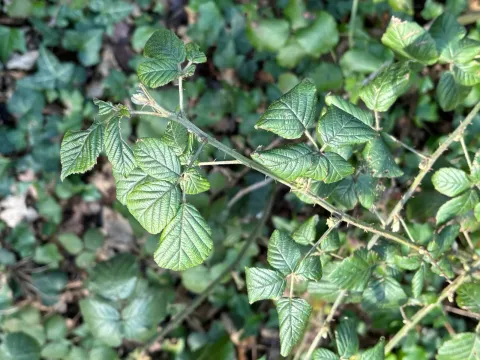
Rubus fruticosus
Rubus fruticosus
Rubus fruticosus, commonly known as the European blackberry, is a perennial shrub belonging to the Rosaceae family. In agricultural practices, it is primarily propagated vegetatively through tip layering or using rooted cuttings to ensure the genetic consistency of the selected cultivars.
What the section contains
Rubus fruticosus
The optimal planting window occurs during early spring before the start of active sap flow or in late autumn, ensuring the root system can establish before ground frost. Proper timing is critical for the long-term vigor of the blackberry plantation.
Standard cultivation layouts involve spacing rows about 2.5 to 3 meters apart, with individual plants set 1 to 1.5 meters within the row. This structure provides necessary airflow and creates enough workspace for seasonal management and harvest activities.
Selecting healthy, disease-free nursery stock with a robust fibrous root system is essential for successful establishment. Post-planting care must include immediate irrigation and the application of mulch to preserve soil moisture and suppress competing weed growth.
The crop is known for its rapid vegetative spread, requiring diligent management of suckers and runners. Controlling the plant's architecture from the first year is vital to prevent an overly dense, unmanageable thicket.
Blackberries thrive in sites with full sun exposure, which is necessary for sugar accumulation and fruit quality. While they are tolerant of partial shade, fruit yields and quality are significantly higher when the plants receive maximum daily sunlight.
The soil should be well-drained, fertile, and slightly acidic. The crop is highly sensitive to waterlogged conditions, which can lead to root rot and overall plant decline; therefore, site selection must prioritize excellent soil drainage.
Climate management is a key aspect of blackberry agronomy. In regions with harsh winters, canes must be removed from trellises and protected with insulation materials to prevent low-temperature injury to the flower buds.
Consistent moisture is required, especially during the flowering and berry development stages. Advanced irrigation systems are recommended to maintain steady growth rates and ensure that the berries reach their full size and potential market weight.
Trellising is mandatory for commercial production. It lifts the canes off the ground, which improves airflow, reduces the incidence of fungal diseases, and drastically simplifies the harvesting process for labor efficiency.
Yield potential in Rubus fruticosus is directly linked to the health of the previous year's cane growth. Proper management allows for the first significant harvest in the third year after the plantation is established.
A well-maintained blackberry plant can yield between 3 to 9 kilograms of fruit annually. On a commercial scale, optimized intensive systems can produce high-quality yields suitable for both fresh markets and industrial processing applications.
Harvested berries are perishable and require immediate cooling to maintain firmness and flavor profile. Proper temperature control during storage and transportation is critical to extending the post-harvest shelf life of the crop.
Pruning is the most essential maintenance task. Removing spent, two-year-old canes immediately after harvest promotes the growth of vigorous primocanes, which will support the next season's crop and keep the plant healthy.
The fruit is a versatile resource used extensively for jams, jellies, preserves, and fresh consumption. Its nutritional profile and antioxidant content make it a highly valued commodity in the berry industry.
The blackberry mite (Acalitus essigi) is a significant pest that causes uneven ripening, leading to hard, inedible berries. Vigilant monitoring is required to mitigate the impact of this pest during the critical fruit development period.
Fungal diseases such as anthracnose and rust are common challenges in humid environments. These pathogens manifest on stems and leaves, potentially reducing the photosynthetic capacity of the plants and lowering overall berry production.
Sanitation practices are the first line of defense. Removing and destroying infected plant tissue helps prevent the spread of diseases. Maintaining an open canopy through proper spacing and pruning is also crucial for disease prevention.
Biopesticides are preferred for pest control to minimize chemical residues on the fruit. Integrated Pest Management (IPM) strategies, including the use of beneficial insects, are standard in modern, high-quality blackberry orchards.
- Blackberry mite (Acalitus essigi)
- Anthracnose (Elsinoe veneta)
- Orange rust (Gymnoconia nitens)
- Raspberry beetle (Byturus tomentosus)