
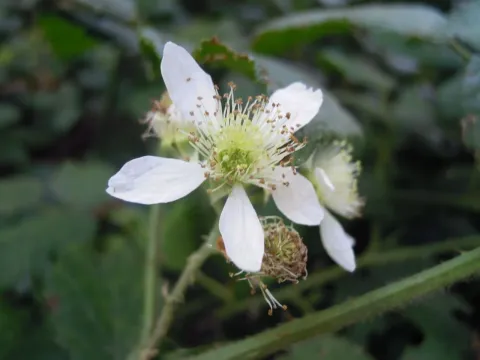
Rubus foliosus
Rubus foliosus
Rubus foliosus is a perennial shrub belonging to the Rosaceae family. It is a distinctive member of the blackberry group, recognized by its complex growth habit and its ability to thrive in diverse woodland and forest-edge habitats across Europe.
What the section contains
Rubus foliosus
The plant requires well-drained, humus-rich soils to flourish. It prefers neutral to slightly acidic pH levels, which facilitate the efficient uptake of essential nutrients needed for vigorous cane development and fruit production.
Climate requirements for this species include exposure to full sun for optimal flowering and fruiting. While the plant can withstand partial shade, consistent sunlight is essential for preventing fungal outbreaks and ensuring that the berries develop full flavor.
Agrotechnical management primarily involves structured pruning and trellis support. By training the canes vertically, growers improve air circulation and sunlight penetration, which are critical for both plant health and efficient maintenance.
Economically, Rubus foliosus is valued for its fruit, which contains high levels of antioxidants and vitamins. The plant is also utilized in secondary food processing and holds potential for further research in nutraceutical applications.
The primary threats to Rubus foliosus cultivation are fungal pathogens, specifically rusts and anthracnose, which are favored by high humidity and poor site management.
Pest challenges frequently include the blackberry mite and various aphid species that compromise plant vigor and berry quality through their feeding activities.
- Regular monitoring of the underside of leaves for pest activity.
- Sanitary removal of infected canes after the harvest season.
- Maintaining proper spacing between rows to reduce humidity.
Implementing a preventive spray program with registered fungicides can significantly reduce the incidence of diseases during particularly wet growing seasons.
Balanced fertilization practices are also key; over-application of nitrogen can lead to succulent growth that is more susceptible to both pests and winter injury.
The harvesting of Rubus foliosus is a labor-intensive process due to the delicate texture of the fruit. Berries must be handled with care to prevent bruising or crushing during picking.
Optimal harvest timing is achieved when the berries reach a deep, uniform color and easily detach from the receptacle. Harvesting should be performed during the cooler morning hours to ensure maximum shelf life.
Once harvested, fruit should be cooled immediately. Cold storage at near-zero temperatures is necessary to maintain the freshness and chemical stability of the berries before processing or retail sale.
Consistent irrigation throughout the fruit expansion phase is critical for achieving good berry size and uniform maturation, which directly impacts the total harvest volume.
Proper harvest planning is essential, as the ripening window can be short and requires sufficient labor availability to ensure that berries are picked at their peak quality.