
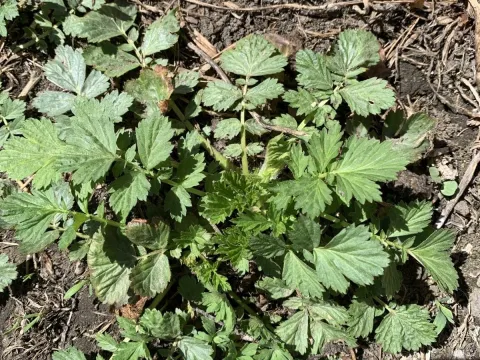
Aleppo avens
Geum aleppicum
Aleppo avens (Geum aleppicum) is a robust perennial herb belonging to the Rosaceae family. It is typically propagated via seeds, which can be sown directly into the soil in early spring once the threat of heavy frost has passed.
What the section contains
Aleppo avens
For optimal germination, seeds should be sown at a depth of 1–2 cm in well-prepared, loose soil. The seeds require consistent moisture to break dormancy and establish a healthy root system within the first growth season.
In addition to seed propagation, the plant can be divided during the dormant season. Dividing mature clumps every 3–4 years helps maintain plant vigor and prevents the center of the root mass from becoming overly congested.
Spacing between plants should be approximately 30–40 cm to allow for proper air circulation. Sufficient spacing is essential to reduce the risk of foliage diseases, which are common in densely packed, humid environments.
Seedlings should be kept in a protected environment or under a thin layer of mulch if sown in late autumn to ensure they are protected from extreme temperature fluctuations during the winter months.
The plant thrives in moist, fertile soils with a neutral pH. While it is adaptable, it prefers sites that receive partial shade, especially in regions with hot, intense summers where the soil can dry out rapidly.
Water management is critical for Aleppo avens; while it requires consistent moisture to flourish, it does not tolerate waterlogged soil. Proper drainage is a fundamental requirement for long-term survival in field cultivation.
Soil cultivation, including weeding and hoeing, is necessary during the active growth phases. Removing competitive weed species prevents the depletion of essential soil nutrients and water resources needed by the crop.
Fertilization with balanced NPK compounds encourages strong vegetative growth and subsequent flowering. Organic compost is highly recommended for soil structure improvement and long-term nutrient availability.
This species is exceptionally cold-hardy, capable of surviving harsh winters without specific protection in most temperate zones. It is a reliable choice for regions where shorter growing seasons and cold winters are the norm.
Like many members of the Rosaceae family, Aleppo avens is susceptible to powdery mildew, particularly when air circulation is poor. Fungicidal sprays or improved spacing can effectively mitigate this fungal threat.
Aphids and spider mites are common pests that colonize the undersides of the leaves. Monitoring the foliage early in the season and utilizing biological control agents or insecticidal soap can manage these outbreaks.
Root rot represents a significant danger in fields with heavy clay content and poor drainage. Ensuring that the site allows for effective drainage is the most successful preventative measure against root-related pathogens.
Leaf spot diseases, often manifesting as dark or necrotic patches, can spread quickly in stagnant, wet weather. Sanitation practices, including the removal of infected debris, are essential for maintaining field health.
Integrated Pest Management (IPM) strategies, which prioritize regular field inspections and the use of natural predators, are highly effective for maintaining the health of Geum aleppicum populations throughout the production cycle.