
Alpine lady's mantle
Alchemilla alpigena
Description
Growing requirements
Alpine lady's mantle (Alchemilla alpigena) is a robust perennial herb belonging to the Rosaceae family. It is naturally adapted to the harsh, nutrient-poor conditions of high-altitude mountain environments.
The plant requires well-drained, gritty or stony soils to thrive. It is essential to ensure that the site has excellent drainage, as the species is highly susceptible to root rot in waterlogged conditions.
In terms of climate, it prefers cooler temperatures and thrives in partial shade in warmer regions. It is fully hardy and capable of surviving extreme winter conditions without special protection.
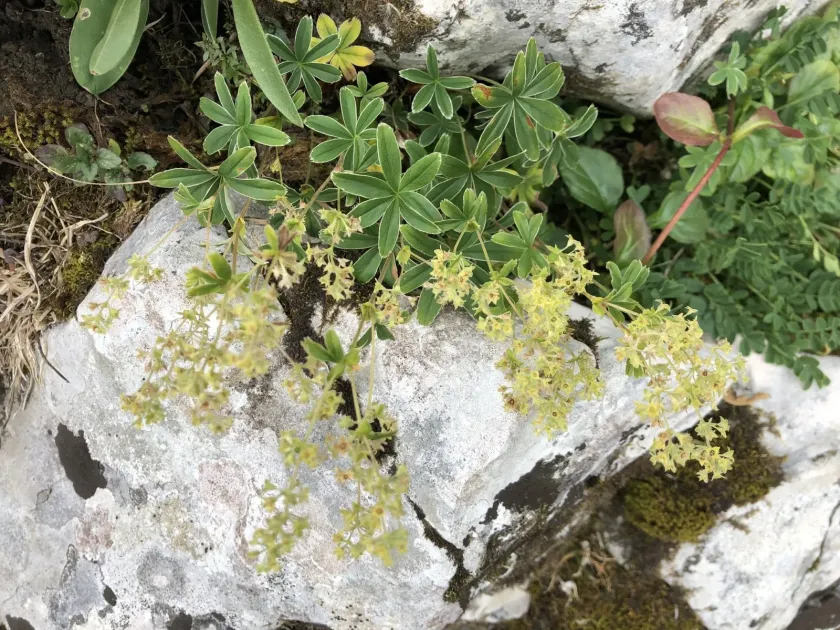
Botanically, it is characterized by its palmately lobed leaves, which often display a silvery edge, and clusters of small, yellowish-green flowers that appear in early to mid-summer.
Cultivation practices involve regular division of mature clumps every few years to ensure plant vigor. It does not require intensive fertilization, as it is adapted to lean soils.
Main diseases and pests
Alpine lady's mantle is relatively resistant to major agricultural pests; however, like other species in the genus, it can be susceptible to powdery mildew during warm, humid spells.
Gastropods such as slugs and snails are occasionally problematic during the early spring growth period, particularly when the weather is consistently wet.
The most significant threat to this crop is poor soil aeration and water stagnation, which quickly leads to the decay of the root crown and eventual death of the plant.
Proper garden management, including the removal of dead foliage and ensuring adequate space between plants, is the most effective way to prevent fungal infections.
Routine monitoring is advised during the peak growing season to detect early signs of pest activity, ensuring that the health of the foliage remains intact for both ornamental and medicinal purposes.