
Alpine lady's-mantle
Alchemilla alpina
Description
Growing requirements
Alpine lady's-mantle (Alchemilla alpina) is a perennial herbaceous plant belonging to the Rosaceae family. It is native to the mountain ranges of Europe and Greenland, typically found in high-altitude environments characterized by rocky soils and harsh, cool conditions.
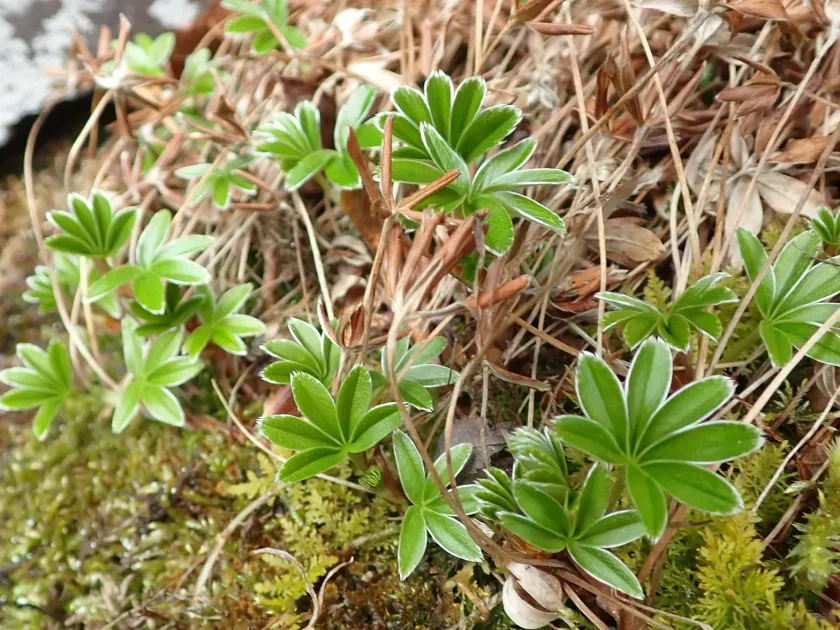
The plant is distinguished by its unique foliage, consisting of basal rosettes of palmately divided leaves with a distinctive silvery underside due to dense hair cover. Small, yellow-green flowers are produced in loose clusters throughout the late spring and summer months.
Cultivation requirements for Alchemilla alpina emphasize the need for well-draining soil, as this plant is prone to root rot if waterlogged. It thrives in sunny locations but can tolerate partial shade, making it a versatile choice for rock gardens and ground cover applications.
Regarding agrotechnical management, the plant is relatively low-maintenance once established. It benefits from occasional weeding during its initial growth phase and can be propagated through division of the root clump in early spring or autumn to maintain plant health.
Beyond its aesthetic value in landscape design, the alpine lady's-mantle has a long history of traditional use due to its astringent and anti-inflammatory properties. It is often harvested for herbal medicine, reflecting its status as both an ornamental and functional crop.
Main diseases and pests
The most significant pathological threats to Alpine lady's-mantle include fungal pathogens like powdery mildew, which can thrive if the plants are placed in areas with poor airflow. Ensuring adequate spacing is the primary cultural control method.
Insect pests such as spider mites and leaf nematodes may occasionally damage the foliage, especially in dry, warm conditions. Monitoring and timely removal of infected plant material are recommended to prevent the spread of these infestations within the planting bed.