
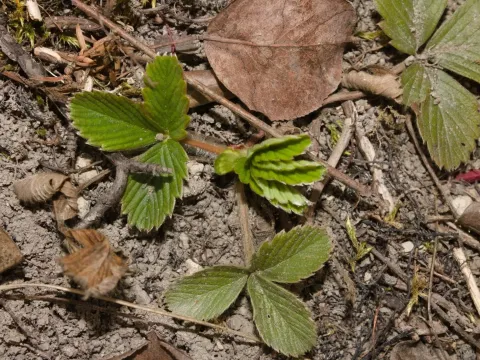
Green strawberry
Fragaria viridis
Green strawberry, scientifically known as Fragaria viridis, is a perennial herbaceous plant belonging to the Rosaceae family. It is distinct for its drought tolerance and preference for sunny, open habitats across Europe and parts of Asia.
What the section contains
Green strawberry
The plant thrives in regions with well-drained, nutrient-rich soil. Unlike garden hybrids, this species is highly adapted to dry grasslands and rocky hillsides, where it competes effectively with native meadow flora.
Climatic requirements involve a high demand for solar radiation. The plant requires abundant sunlight to produce fruit, as shade significantly reduces photosynthetic efficiency and overall plant vigor.
Soil management should focus on maintaining a neutral or slightly alkaline pH level. The species performs best in sandy or loamy soils that allow for excellent root development and aeration.
Botanical features include densely pubescent leaves and a characteristic greenish-pink or dark red fruit with a musky scent. This plant is a valuable genetic resource for breeders focusing on stress-resilient varieties.
The yield potential of Fragaria viridis is lower than that of modern strawberry cultivars. However, the unique flavor and high antioxidant content make it highly prized among specialty producers.
In terms of production, the crop is often gathered from natural populations, but small-scale cultivation is increasing due to the growing demand for artisanal, wild-tasting produce.
The fruits serve as an excellent ingredient for jams, liqueurs, and specialized confectionery products. Their robust flavor profile adds value to high-end culinary applications.
Pollination is a critical yield factor. The species relies heavily on diverse insect populations to ensure full fruit development and to maximize the harvest quantity.
Success in yield optimization is achieved through careful attention to spacing and nutrient management, ensuring that plants have enough resources to develop strong reproductive organs.
The main threats to green strawberry crops include fungal diseases such as powdery mildew and various leaf spots, which thrive in stagnant or overly humid environments.
Pests, particularly the strawberry mite, pose a significant risk by causing leaf deformity and stunting plant growth. Integrated pest management strategies are essential for control.
Weevils can also cause localized damage to buds and flowers, reducing the fruit count. Regular scouting of the fields during the pre-flowering stage is recommended to detect these insects.
Root nematodes represent a long-term threat to plantation longevity. Soil testing prior to planting is a mandatory practice for preventing widespread infestation of the root system.
Weed management is vital as the plant does not cope well with competition from taller, invasive grasses. Regular cultivation around the base of the plant is necessary.
Harvesting usually takes place in mid-summer when the berries reach full ripeness. A key sign of maturity is the ease with which the fruit separates from the receptacle.
Manual harvesting is the standard, as the soft berries are prone to bruising. Using shallow crates ensures that the weight of the berries does not crush those at the bottom.
Picking the fruit during the early morning hours helps maintain moisture levels and shelf life. Keeping the sepals attached can further extend the post-harvest durability of the berries.
Post-harvest storage requires immediate refrigeration to preserve the volatile aromatic compounds. These compounds give the fruit its signature musky, intense flavor profile.
Logistics planning for harvest is essential to ensure that the perishable crop reaches its destination in optimal condition, whether for direct market sale or industrial processing.