
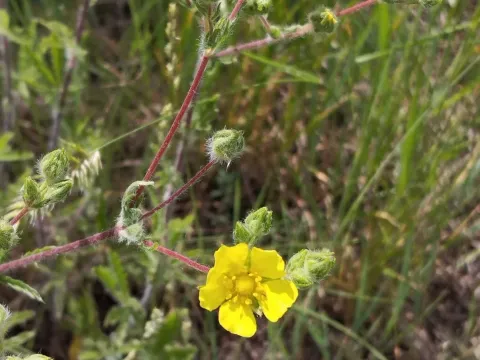
Grey cinquefoil
Potentilla inclinata
Potentilla inclinata, commonly known as grey cinquefoil, is a perennial herbaceous plant belonging to the Rosaceae family. It is native to temperate regions of Eurasia and is often found in grasslands, rocky slopes, and dry meadows.
What the section contains
Grey cinquefoil
The plant thrives in well-drained, sandy or loamy soils with low to moderate nutrient content. It is highly valued for its drought tolerance, making it an excellent candidate for cultivation on marginal or rocky agricultural lands.
Environmental conditions require full sunlight exposure to ensure optimal growth and flower production. It is a hardy species capable of surviving cold winters and adapting to various ecological niches within its natural range.
Botanically, it is characterized by its decumbent or ascending stems, grayish pubescent leaves, and clusters of yellow flowers. Its root system is strong, allowing it to anchor effectively in loose or stony substrates.
Host utility includes its role in erosion control, potential use in phytoremediation projects, and medicinal applications where the plant's secondary metabolites are valued for traditional therapeutic practices.
The primary threats to Potentilla inclinata are fungal infections such as powdery mildew and various leaf spot pathogens that proliferate in stagnant, humid environments.
Insect pests, including aphids and leaf-chewing larvae, may pose a risk by damaging foliage and flowers, potentially reducing the overall vigor and reproductive output of the plant stands.
To mitigate these risks, it is essential to maintain proper spacing between plants to encourage airflow and prevent the accumulation of moisture on leaves.
Integrated pest management strategies involve monitoring fields for early signs of infestation and using biological control agents or targeted pesticides only when necessary.
Proper field maintenance, including the removal of dead plant material at the end of the season, significantly reduces the overwintering sites for many typical pathogens and pests.