
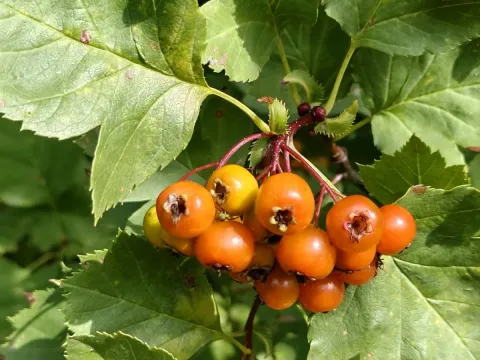
Green-fruited hawthorn
Crataegus chlorocarpa
Green-fruited hawthorn (Crataegus chlorocarpa) is a deciduous shrub or small tree belonging to the Rosaceae family. It is distinct due to its unique fruit, which maintains a characteristic yellow-green color even when fully mature, setting it apart from common red-fruited hawthorn varieties.
What the section contains
Green-fruited hawthorn
This species is highly adaptable and displays excellent winter hardiness across diverse climatic zones. The plant thrives best in open, sun-drenched locations where it can achieve maximum foliage density and reproductive success.
It is not overly demanding regarding soil conditions, performing well in fertile, well-drained loams or sandy soils. However, avoiding waterlogged sites is essential for maintaining a healthy and robust root system during the plant's long lifecycle.
The native distribution of this species spans various temperate landscapes, where it has evolved to tolerate environmental fluctuations. Once established, the shrub shows significant resilience to periods of limited water, though consistent moisture is key during fruit development.
Economically, this culture is valued for both its pharmaceutical properties, given the chemical composition of its berries, and its use in landscaping for the installation of dense, impenetrable hedges that provide excellent windbreaks.
The green-fruited hawthorn is susceptible to common diseases affecting the Rosaceae family. Powdery mildew is a primary concern, particularly when air circulation is poor, which can lead to rapid fungal spread across the canopy during humid seasons.
Leaf rust is another prevalent threat that can cause premature senescence and foliage drop, significantly stressing the plant. Integrated pest management, including fungicide application, is recommended at the first signs of infection.
Pests such as aphids and various species of mites can cause substantial damage to tender foliage. These pests reduce the photosynthetic capacity of the shrub and may vector additional viral diseases if not controlled in a timely manner.
Weevils pose a significant threat to the flower buds, often jeopardizing the potential harvest. Strategic monitoring during the budding phase is vital to assess the need for targeted insecticide application to protect the developing fruit.
Maintaining a healthy garden environment involves routine sanitation. Pruning and removing diseased branches and debris from beneath the shrub are fundamental steps in limiting the pressure of pathogens and maintaining long-term crop vitality.