
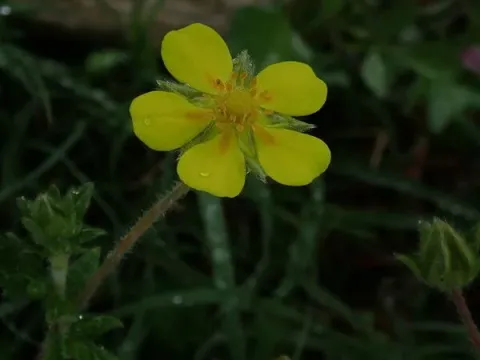
Griffith's cinquefoil
Potentilla griffithii
Griffith's cinquefoil (Potentilla griffithii) is a perennial herb belonging to the Rosaceae family. Native to the Himalayan regions, this plant has evolved to thrive in high-altitude environments characterized by distinct seasonality.
What the section contains
Griffith's cinquefoil
The culture requires well-drained, nutrient-rich soils with a neutral or slightly alkaline pH. Exposure to direct sunlight is essential for the development of vibrant foliage and strong inflorescences, making it an excellent candidate for sun-exposed garden beds.
Climatic requirements focus on cool to moderate temperatures. While it exhibits great cold hardiness, the plant benefits from protection against excessive humidity, which can lead to fungal issues. It is well-suited for temperate climates and alpine garden conditions.
Morphologically, the plant features basal rosettes and attractive, multi-colored flowers. Its root system is structurally adapted to anchor the plant in rocky or mountainous terrains, contributing to its overall robustness and longevity in stable garden conditions.
The economic value of this species lies primarily in horticulture. It is highly valued for its decorative qualities, providing reliable seasonal color and requiring minimal maintenance once established in the proper environment.
Fungal pathogens such as powdery mildew represent the primary threat to Griffith's cinquefoil. These often appear in stagnant air conditions or when there is insufficient space between individual plants.
Root rot is a major risk factor associated with poor soil drainage. Keeping the soil friable and ensuring adequate slope for water runoff can significantly reduce the risk of plant loss during the rainy seasons.
Aphids and spider mites are the most common pests observed on this species. They feed on the sap of the plant, potentially causing stunted growth and leaf curling if not treated with appropriate insecticidal soaps or systemic pesticides.
Soil-dwelling larvae can periodically pose a danger to the root structure. Proper soil preparation and the use of natural predators can help manage these populations without excessive chemical interventions.
To ensure plant health, it is recommended to perform regular pruning of dead tissues. This practice not only maintains the aesthetic appeal of the plant but also removes potential overwintering sites for various fungal spores and pest eggs.