
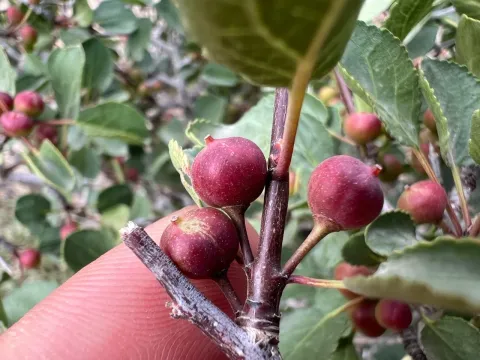
Rhamnus orbiculata
Rhamnus orbiculata
Rhamnus orbiculata, a member of the Rhamnaceae family, is a hardy shrub known for its round-shaped foliage and high tolerance for rocky, arid environments. Originating from specific ecological zones, it has evolved to thrive in soils with low nutrient content.
What the section contains
Rhamnus orbiculata
Botanically, the species is characterized by its slow growth habit and dense, resilient branch structure. Its root system is particularly adept at establishing itself in challenging substrates, providing stability against erosion in mountainous or sloping terrains.
Soil requirements focus primarily on drainage. To maintain optimal health, Rhamnus orbiculata should be planted in well-aerated substrates. Heavy or waterlogged soils should be amended with organic material or gravel to prevent root rot, which is a common threat to this shrub.
Climatic requirements favor sunny exposures where the plant can receive full or partial sunlight for most of the day. Exposure to direct light is crucial for the development of its characteristic leaves and the overall structural integrity of the plant's canopy.
Agricultural management is relatively simple, requiring minimal maintenance once the plant is established. Annual pruning should be performed in late winter or early spring to remove dead wood and encourage healthier growth during the coming season.
The primary economic use of Rhamnus orbiculata is within the landscape industry, where it is utilized for its durability and aesthetic appeal. It is often chosen for drought-tolerant xeriscaping projects and naturalistic garden designs.
Environmental restoration is another key application for this plant. By utilizing its robust root system, conservationists use Rhamnus orbiculata to stabilize slopes and reclaimed lands, preventing soil degradation in areas prone to runoff.
Seed harvesting should be performed when the fruit reaches maturity, ensuring that the seeds are properly dried before storage. Cold stratification is highly recommended to improve germination rates for those interested in propagating the species.
While some species of the genus Rhamnus are used for medicinal purposes, Rhamnus orbiculata is primarily appreciated for its architectural qualities in garden planning. Care should be taken to confirm safety protocols if considering any medicinal application.
Evaluation of success in cultivation is measured by the plant's ability to maintain a full, healthy canopy throughout the growing season without the need for intensive irrigation or chemical fertilizer applications.