
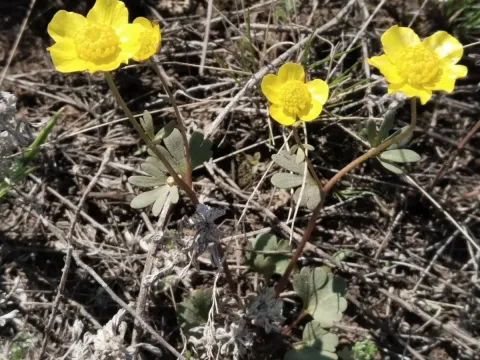
Ranunculus polyrhizos
Ranunculus polyrhizos
Ranunculus polyrhizos belongs to the Ranunculaceae family. It is a perennial herbaceous plant naturally occurring in steppe environments, adapted to specific edaphic and climatic conditions.
What the section contains
Ranunculus polyrhizos
The plant thrives in well-drained, neutral to slightly alkaline soils. It requires full sunlight exposure to maintain high photosynthetic efficiency and ensure proper development of its tuberous root system.
Climatically, it is highly resilient to cold winters and moderate summer droughts, which is typical for its native distribution range. This durability makes it a valuable species for ecological restoration in arid regions.
Agrotechnical management focuses on avoiding soil compaction. Given its sensitive root physiology, cultivation on clay-heavy soils requires thorough aeration to prevent anaerobic conditions that could lead to root rot.
In terms of agricultural utility, it serves as a component of wild pastures. Producers must manage grazing density to prevent potential toxicity issues common to many Ranunculus species when consumed in large fresh quantities by livestock.
Major phytopathological threats include powdery mildew and rust fungi, which are particularly prevalent during periods of high humidity and poor air circulation within the canopy.
Pest issues often involve root-feeding insects such as wireworms, which can severely compromise the plant's stability and uptake of nutrients during the critical early growth phase.
Leaf-mining insects may also impact the photosynthetic area, reducing the overall biomass yield. Management should prioritize biological controls and habitat management to encourage natural predators.
Prevention strategies involve crop rotation and the maintenance of optimal moisture levels. Avoidance of excessive nitrogen fertilization is also advised, as it can make tissues more susceptible to fungal pathogens.
Regular field inspection is essential to identify early symptoms of chlorosis or spotting, allowing for targeted intervention before large areas of the crop are affected by potential outbreaks.