
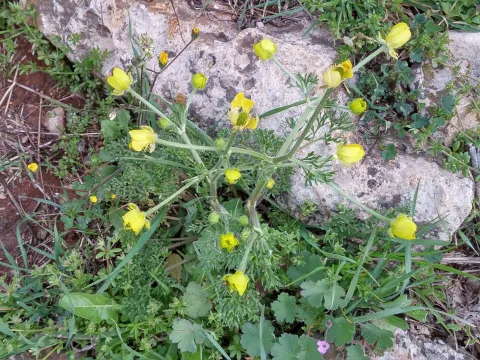
Ranunculus millefolius
Ranunculus millefolius
Ranunculus millefolius is a perennial herbaceous plant belonging to the Ranunculaceae family. It is distinguished by its finely divided, feathery leaves, which provide its scientific name, literally translating to the thousand-leaf buttercup.
What the section contains
Ranunculus millefolius
The species is native to mountainous regions, where it thrives in open meadows and rocky slopes. It has evolved to cope with high-altitude environments, utilizing cold winters as a mandatory phase for its biological development cycle during the early spring period.
Optimal growth requires well-draining, nutrient-rich soils with a slightly acidic to neutral pH profile. The plant is sensitive to waterlogging, which often leads to root rot if the soil structure remains saturated for an extended duration during the growing season.
The underground part of the plant consists of tuberous roots that store starch, providing energy for rapid spring growth. This evolutionary adaptation allows the species to flower and set seeds quickly before the heat of the summer dries up its habitat.
In terms of agricultural interest, this plant is primarily valued for its role in biodiversity. It serves as a indicator species for specific alpine ecosystems, highlighting the health and integrity of high-altitude grasslands.
Like many buttercups, Ranunculus millefolius contains protoanemonin, a natural toxin that acts as a potent deterrent against most herbivores. This chemical defense mechanism is highly effective, resulting in minimal damage from insect pests.
Fungal pathogens represent the primary threat to this plant, especially when cultivated in environments with poor air circulation. Powdery mildew and leaf spot diseases are common if the plants are placed too closely together or if humidity levels remain high.
Over-compaction of the soil can inadvertently damage the tuberous root system, making the plant more susceptible to opportunistic pathogens. Proper soil aeration is essential for maintaining the vigor of the plant throughout its lifecycle.
There are few, if any, effective pesticide protocols designed specifically for this wild species. Prevention relies heavily on maintaining a natural balance, ensuring that the soil is not overly enriched with nitrates, which could make the plant softer and more vulnerable.
Monitoring the plant health involves regular inspections for any discoloration of the foliage, which can indicate the onset of root-level issues. By keeping the plant in its preferred high-light, well-drained setting, most biological threats are naturally mitigated.