
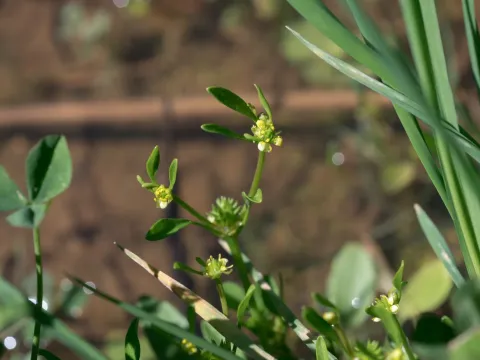
Ranunculus lateriflorus
Ranunculus lateriflorus
Ranunculus lateriflorus is an herbaceous plant belonging to the Ranunculaceae family, widely known as the buttercup family. It is a highly specialized species adapted to wetland environments, thriving in habitats where water availability is abundant throughout the growing season.
What the section contains
Ranunculus lateriflorus
Originating from temperate and subtropical regions of Eurasia, this species typically occupies floodplains, marshy meadows, and riparian zones. Its evolutionary history has tied its growth cycle closely to water-logged soils, where it forms significant vegetative stands.
Botanically, the plant features distinct foliage and a branching stem structure. Unlike other members of the genus, its flowers are characteristically arranged, contributing to its scientific designation. The plant exhibits high plasticity in response to water levels, which is vital for its survival in volatile riparian areas.
Regarding cultivation requirements, the species demands high moisture levels and prefers fertile, moist soil. It is not a traditional crop but a botanical subject that requires specific conditions: full sun to partial shade and a lack of soil dryness to complete its life cycle successfully.
In agricultural settings, the presence of this plant is often viewed with caution. Due to the presence of secondary metabolites such as protoanemonin, it is avoided by livestock, making it a target for weed management programs on pasture lands where high concentrations can reduce grazing quality.
Ranunculus lateriflorus is vulnerable to various fungal pathogens that thrive in its humid environment. Powdery mildew is the most common affliction, appearing as a white dusting on the foliage during periods of stagnant air and humidity.
Rust fungi also pose a significant threat to the plant's health, causing necrosis of the leaf tissues and reducing the total biomass production. These infections are often difficult to control without modifying the plant's surrounding microclimate.
Insect pests such as leaf beetles are particularly attracted to this species. These insects can cause extensive damage by feeding on the leaves, which stresses the plant and leaves it vulnerable to secondary infections by bacteria or viruses.
Root-feeding larvae can also inhibit growth by damaging the underground structures. This is especially problematic in areas with poor drainage, where the weakened plant struggle to recover from physical herbivory.
Effective management against these threats typically involves integrated pest management strategies. Preventing overcrowding and promoting biodiversity in riparian zones helps keep pest populations in check without resorting to heavy chemical interventions that could harm local water sources.